

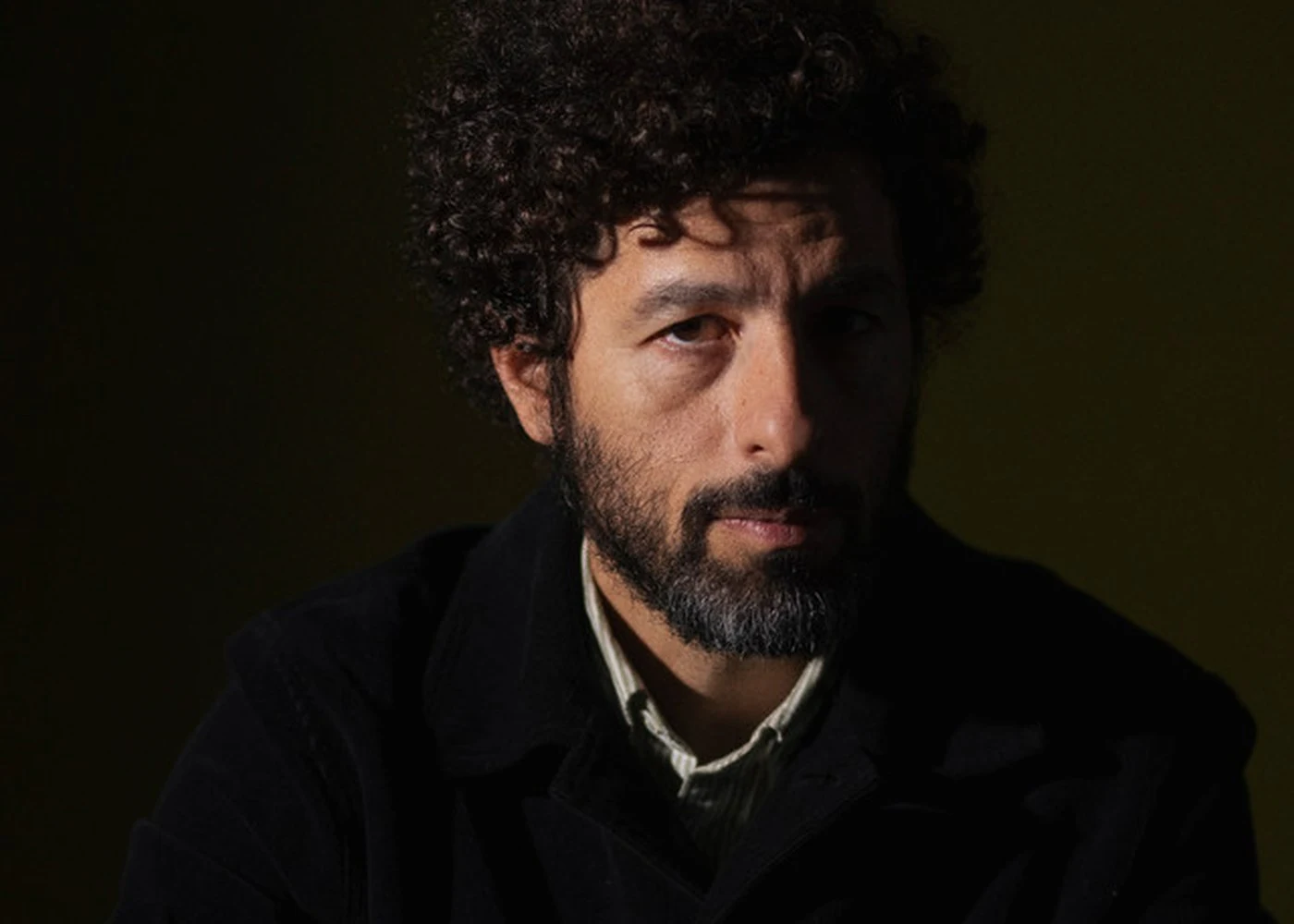
Two people in a dark room, both under the influence, four hands reaching. Then the hands let go, in the same line they arrive. "Heartbeats" keeps doing this. It counts intimacy in body parts, then shows you the parts never add up to one. The song is about a short, intense affair that the narrator insists was love, and about how two people pressed together in one bed still keep their own time.
Four hands and then away
Count the evidence in the first verse. One night. Two people. Four hands. Nobody gets a name or a face, only what they can hold.
"We had a promise made / Four hands and then away"
The promise and the parting sit side by side with nothing in between. "And then away" is three words. The hands meet and leave before the line ends.
Then the altered state. "Both under influence," the narrator admits, and in the next breath claims "divine sense / To know what to say." That's the high talking. Being out of their heads makes them feel chosen, certain of the right words.
"Mind is a razor blade"
The razor line comes right after, flat, with no "my" or "the" in front of it. A razor is sharp enough to be useful and sharp enough to cut whoever holds it. Under the influence, the mind runs clear and fast, slicing toward the truth the opening promised to "speed up." But a blade doesn't care whose skin it's on. The narrator is bragging and warning in the same four words.
The chorus: hands of above, refused
The strangest phrase in the song is also the one it repeats most.
"To call for hands of above to lean on / Wouldn't be good enough"
Listen to the grammar. The usual phrase would be "from above." The song says "of above," as if heaven were a place with its own set of hands, an extra pair you could borrow. The song has already counted four hands in the room. These would be spares, and the narrator turns them down.
I hear the refusal as pride, and the song gives us enough to catch it. A few lines earlier, the narrator was happy to claim divine sense while high. Heaven's certainty is welcome when it flatters. Heaven's support, something to actually lean on, gets waved off. The narrator takes the confidence and rejects the help.
On some passes, "For me, no" drops away. Sometimes the refusal is spoken. Sometimes it just hangs there. By the end it doesn't need saying.
Ten days and a verdict
The second verse moves fast: "a simple touch" to start, then "push and scream / And then relief." Sex or a fight, the lyric won't say, and both fit, since either way it's bodies colliding and going slack. Ten days later the narrator delivers a verdict without a tremor: "We were in love." Ten days. The song never blinks at how short that is, which is exactly why you should.
The turn: a third hand and a set of teeth
Everything so far has been "we." We had a promise. We had divine sense. We were in love. Then the pronoun splits.
"And you, you knew the hand of the devil / And you, kept us awake with wolf teeth"
Here is the hand nobody counted. After the four hands of two lovers and the refused hands of above, a new one shows up, and it belongs to the devil. "You knew" it. Knew it how? As something from a rough past, as a weight felt on the shoulder, as the other person's own nature? The lyric doesn't choose. What changes is the narrator's posture. They stop sharing and start describing, stepping back to look at the other person as someone with a history the narrator was never part of.
The wolf teeth sharpen that distance. Teeth are hunger and threat at once, and they "kept us awake," so the sleeplessness belongs to both of them while the teeth belong to one. It's a strange compliment. Being kept up all night by someone's appetite is thrilling. It's also how you'd describe being circled.
Set this against the chorus and something odd surfaces. The narrator wouldn't take a hand from above. The other person already knew a hand from below. Maybe the narrator chose the devil's company over heaven's help without saying so. Or maybe "you" is a warning that arrives too late. And who is "you," anyway: the same person folded into all those "we" lines, or someone the narrator is only now seeing clearly?
Conclusion: two pulses, one night
The last image keeps the bodies close and splits everything else.
"Sharing different heartbeats / In one night"
You only hear someone's heartbeat with your head on their chest. So this is about as near as two people get, and the narrator reports that the rhythms still don't match. "Sharing" and "different" sit together and neither cancels the other. A fan could hear tenderness here, two hearts keeping each other company, and the voice is gentle enough to allow it.
I hear someone lying awake, counting another person's pulse against their own, ten days in and already sure it was love. The song gave this narrator four hands, a razor mind, and an offer of help from above. They turned down the help and kept the closeness, and the closeness still couldn't make two beats into one.
Frequently Asked Questions
What is "Heartbeats" by José González about?
"Heartbeats" follows a brief, intense affair: one night under the influence, a promise, about ten days, and the narrator's claim that they were in love. The lyrics measure closeness through hands and heartbeats and end by noting that two people in one bed still have different pulses.
What does "you knew the hand of the devil" mean in "Heartbeats"?
The line marks the moment the narrator stops saying "we" and looks at the other person from a distance. It gives that person a darker history or nature, a hand from below that contrasts with the "hands of above" the narrator keeps refusing. The lyric never says exactly what the devil's hand stands for.
What does "Mind is a razor blade" mean in "Heartbeats"?
It describes the sharp, fast clarity the narrator feels while under the influence, the sense of knowing exactly what to say. A razor also cuts whoever holds it, so the line carries a warning that this clarity can turn on its owner.
Lyric analysis powered by Scalpel.

Comments
Loading comments…