

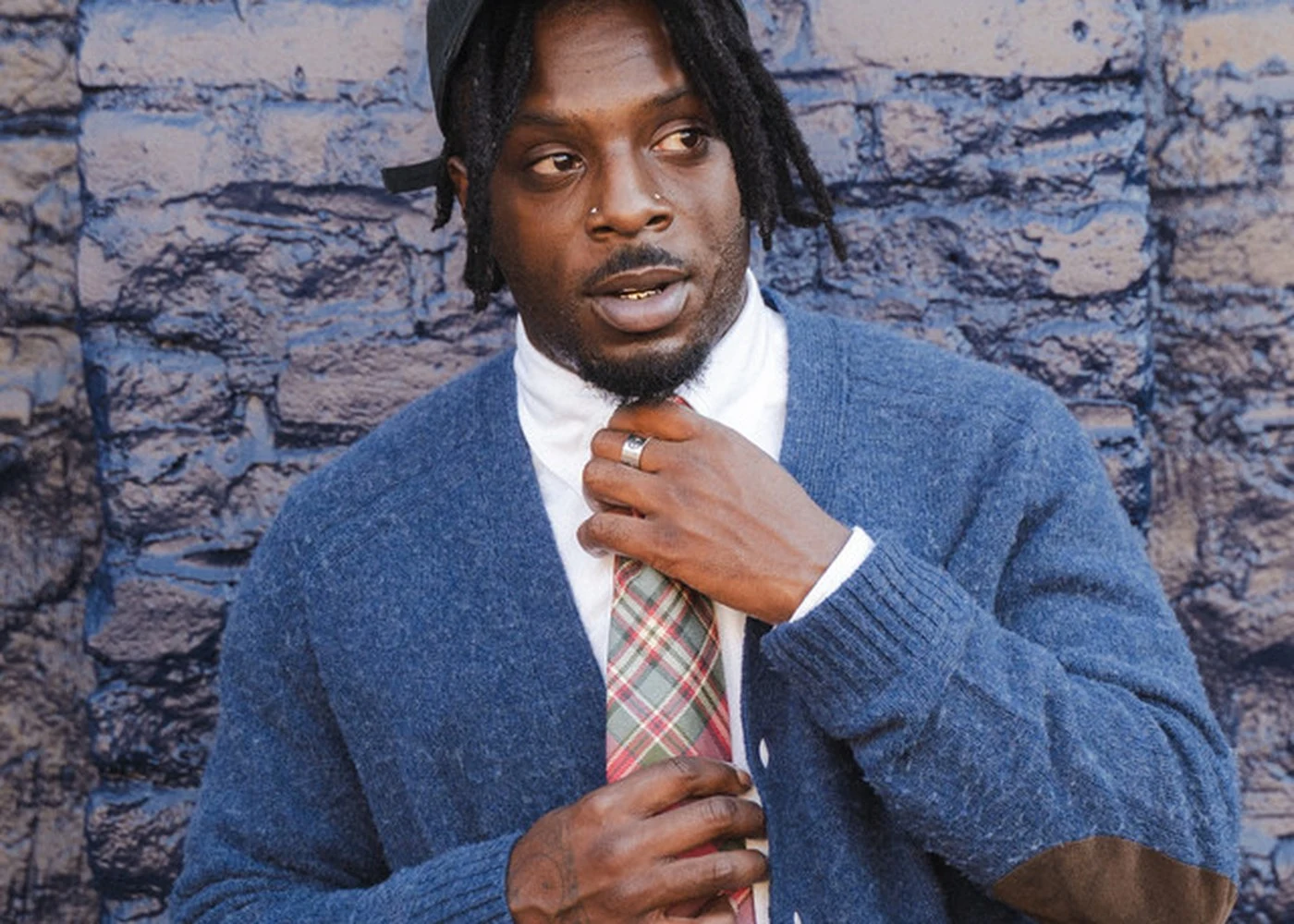
Most songs about spiraling end inside the spiral, with the narrator still smoking, still circling, still the only witness to his own mess. "Wat's Wrong" hands the tape to somebody's father instead, and lets him ask the one question none of the verses would touch: is that about you? Everything before that spoken ending is a woozy pileup of brags, threats, grits, rims and smoke, and I'd argue none of it is the real subject. The song is about what happens when your most reckless bars reach the one listener who takes every word at face value, and how that literal listening turns out to be the closest thing to love anywhere on the track.
The opening pileup: a fresh start that lasts one line
The first verse begins with a haircut, which in any barbershop is a reset. It lasts about four words.
"Cut my hair and bump my head and fell on top / And run on sins, and front on friends"
New look, immediate concussion, then straight back to sinning and fronting. From there the images tumble out without much traffic control: big old rims, LA hoes, a bowl of grits next to "naked pimp," photo tint and photo lens. The comfort food and the persona sit on the same plate, and the narrator never sorts them out. He also keeps disowning himself as he goes, with "I ain't home, I ain't them, I ain't them," a man listing everywhere he isn't.
Then the threats arrive, and they come out half-formed and a little ridiculous. "Let's call some titties and scar your face" is menace that trips over its own syntax, and the very next line puts even his clothes on trial: "The robe of wrongs has caught a case." The best tell is the crew's reaction. "All my niggas like, 'Calm down.'" The verse's first audience already isn't buying the danger, and by the end the narrator is spooked by his own trajectory, picturing himself too tired to write and dying in prison, asking whether he lost his god tonight.
A hook that can't breathe on its own
The chorus admits the spin outright. Being "so ahead of myself" and "runnin' in circles" at the same time is impossible geometry, which is exactly the point: he's racing and getting nowhere. Breath gets held until smoke lets it out, and the promise to "make it out somehow" dissolves into rolling another one and putting it all in the air. Escape, in this hook, means exhaling.
Haunted Mercedes and a Black man as the sun
The second verse opens with a string of questions that start almost spiritual and slide downhill fast: how many souls do you touch, how many hoes, how many flows. The last one sticks: "How many know you can't walk away?" Then the voice swings between extremes with a shrug, saying he might kill everybody around him or heal them, depending on "how the wind blow." Mood decides morality. That's the instability the whole song runs on.
The family history lands right in the middle of it.
"My daddy said a Mercedes had haunted him / But now he got one, I'm ridin' shotgun"
A haunting is a want that follows you around until you either own it or it owns you. The father finally caught the car, and now the son sits beside him "with a three-piece chicken dinner and shot gun," the pun riding shotgun with the chicken. It's a sweet image with a weapon folded inside the wordplay. The dream got passed down, and so did the danger that tends to ride along with getting it. Notice how close this sits to the outro, too: a father and son in the same car, one of them listening.
A few lines later comes the bar people ask about most.
"And I believe in Kool-Aid and God's son / Do you believe that Black man is our sun?"
Kool-Aid and God's son put a sugary childhood staple next to Christ, and both are things you were raised on. Then "son" flips into "sun," and the question turns: is the Black man in front of you the light everything revolves around, the source of warmth, God's son made literal? Given the album is called The Sun's Tirade, the pun earns its weight. The narrator is asking you to see him, and men like him, as holy, and it's phrased as a question because he's not sure you will. Maybe he isn't sure either.
That doubt bleeds into the brag that follows. "I'm the best rapper since 25... I'm 29" ends with anyone who disagrees being "a fuckin' liar," then, without a breath, "Pardon me." Next he introduces a Gemini alter ego who's been around since Reagan. The flex and the split personality share a sentence. A fan could reasonably hear that run as pure swagger, a rapper settling his ranking, and the bars do knock that way. But the apology gives it away for me; nobody that sure of himself says excuse me mid-boast.
The verse closes on its wildest swing. He'll spend a week in Trump Tower spraying the walls and smoking, then "fuck them and fuck y'all and fuck me," himself included, then pledges his last check to the kids, the hood, the bricks, the books, "to right my wrongs." Vandal and philanthropist, one breath apart. Same man.
Third verse: love on a benefits schedule
The last verse gets needier and more frightened. Two Xannies on the table, a plea of "just don't forget me," a request to be hugged "like a sibling." Then: "Weed ain't that important." The hook, which cannot exhale without it, declines to comment.
The violence turns around and points at the narrator now. "Beat me down, you beat me down, reorganize my face," and the first worry after is what his family will say when he gets home. The family has been waiting at the edge of every verse, and here it steps closer. Romance is just as shaky: flowers bought yesterday don't prove anything today.
"Faithful as your EBT, closer than you momma can / Anger when you rang up, I'm a dog but I'm gon' crawl again"
It's a strange, honest measure of devotion. An EBT card is faithful because it reloads every month whether you deserve it or not; you can count on it in a way you can't count on much else. Promising loyalty on that scale is a promise built from what actually showed up in a hard life, and then pushing it past even your mother's closeness. He follows it immediately by calling himself a dog who'll crawl back. The love is real and so is the groveling. The verse ends cut off, mid-thought, with "I been more than late... wait," like the tape stopped on him.
The outro: Pops took it literally
Then somebody just talks. A few years back, the speaker gave his pops the Cilvia Demo. Pops listened for about a week. Then he came back with this:
"Dang boy, why / Zay talkin' 'bout he gon' run up in somebody house?"
All that performed menace across three verses, the scarred faces and killing everybody around him, and here's what it sounds like to someone who loves you. A father didn't hear wordplay or a persona or a Gemini. He heard a threat, sat with it for seven days, and worried. The line I keep coming back to is the follow-up, stuttered: "He-he-he talkin' 'bout you?" The stammer carries the fear. Who Zay is to the speaker, the lyric never settles, and the question splits two ways: is somebody coming for you, or is the guy on this tape secretly you?
Either way, the song's whole defense collapses. The narrator could hide behind alter egos, smoke, homonyms he wants to get paid for rhyming. Pops doesn't do homonyms. He hears "run up in somebody house" and asks if his child is in danger or is the danger. That's a funny story on the surface, and the speaker tells it with a laugh in his voice. Underneath, it's the plain shock of finding out a parent listened that closely, for that long, and was scared for you.
Conclusion
"Wat's Wrong" spends almost its whole length asking the title question to nobody, spinning through sins and smoke and grand pledges, holding its breath. The answer finally comes from the most literal listener in the room. The father doesn't read the song as art, and that's what makes his reading true: the bravado was always a way of saying something was wrong without saying it plainly. Every verse needed somebody to hear it straight. Pops did, a week later, in a car the family finally owned, asking his boy a question he was afraid to have answered.
Frequently Asked Questions
What is "Wat's Wrong (feat. Zacari & Kendrick Lamar)" by Isaiah Rashad about?
The song follows a narrator spinning through brags, threats, drugs and self-doubt, with a chorus about running in circles and needing smoke just to exhale. It ends with a spoken story about a father who heard a demo, took its violent lines literally, and worried his son was in trouble. That ending exposes the bravado as a way of signaling that something is wrong.
What does "Do you believe that Black man is our sun?" mean in "Wat's Wrong"?
The line follows "I believe in Kool-Aid and God's son," so it plays on son and sun. It asks whether a Black man can be seen as holy and central, the light everything revolves around, and it echoes the album title The Sun's Tirade. Framing it as a question shows the narrator isn't sure the listener, or he himself, believes it.
What does the spoken outro about the Cilvia Demo mean?
The speaker recalls giving his father the Cilvia Demo, and after a week of listening, the father asks why Zay is rapping about running up in somebody's house and whether it's about his son. It shows a parent hearing rap bravado as a real threat. The moment is funny but tender, revealing how closely the father listened and how worried he was.
Lyric analysis powered by Scalpel.

Comments
Loading comments…