

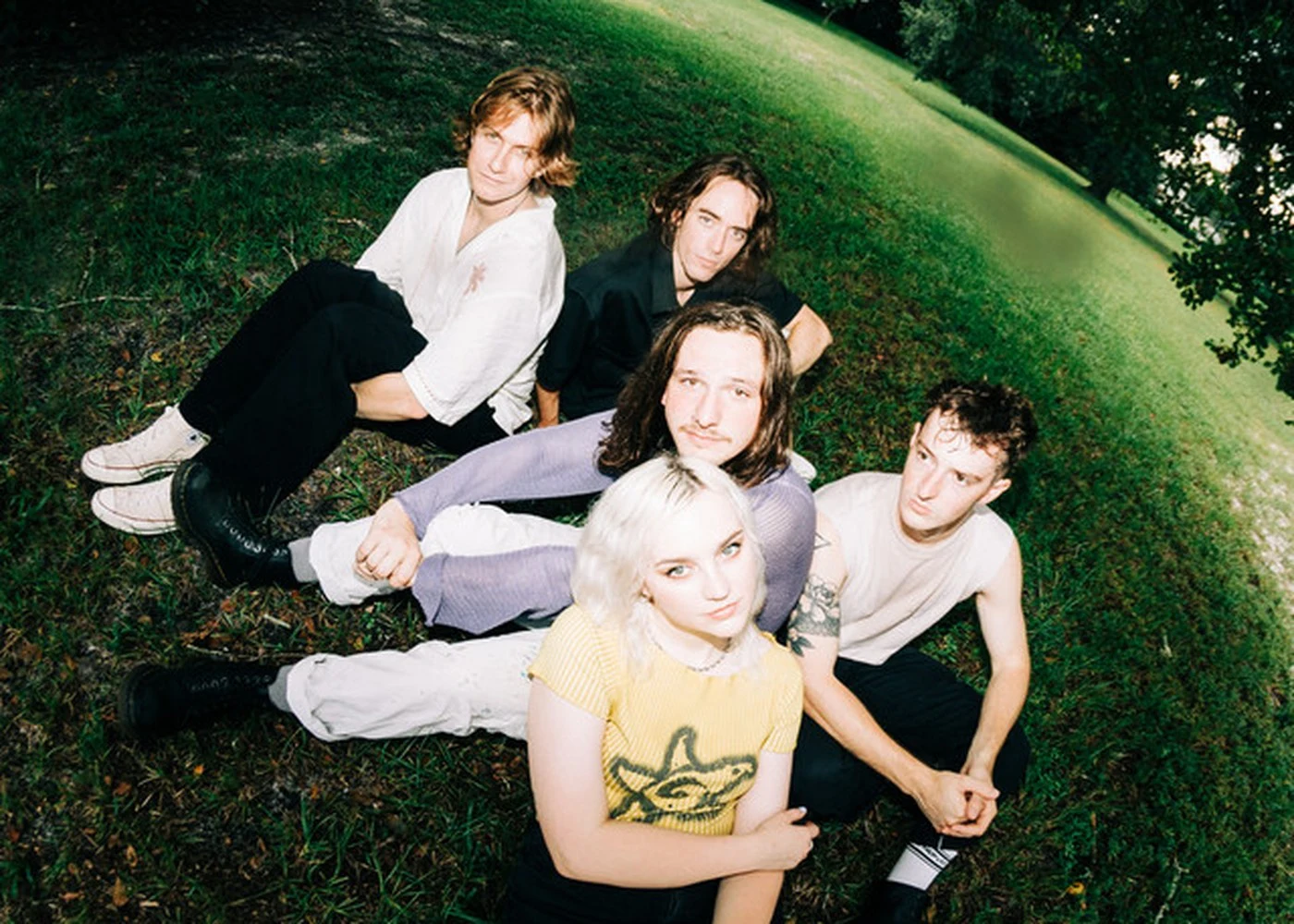
"Now, what the fuck is up with my life?" Every line before that swear in "Sad Disco" happens to the narrator, and every line after it is something they want, including the part where they get eaten. The song is about a person watching a summer romance barrel toward them like a wreck and deciding, eyes wide open, to climb inside it. The chorus keeps calling the whole thing "helpless," and that word is the biggest lie in the song.
Summer as a collision
Sunday should be the day nothing happens. Here it's the day of impact.
"Summer came in on a Sunday / Hit me like a drunk on the subway"
The simile is perfect. A drunk on the subway is nobody's fault. The car lurches, a stranger stumbles, you're pinned, and you absorb it. The narrator frames the season, and by extension her, as an accident they couldn't dodge. Remember that framing. The song spends the rest of its length breaking it, line by line.
"Baby, I basked in the violence"
Basking is what you do on a beach towel in July, face up, letting the heat cook you. Point that verb at violence and the narrator stops being a victim of the hit and starts sunbathing in it. Then comes a weird little bouquet, "tulips and vines and the violets," tossed in right after "violence" as if the garden and the bruise belong to the same list, which they do once you notice that tulips get cut, violets grow low enough to step on, and vines are the plant that climbs over you slowly and doesn't let go.
Down in the basement, already suspicious
She takes the narrator "down to her basement / Underneath the jungle pavement." Picture concrete cracked open by green, a city sidewalk gone feral, and under it a cool, hidden room. The romance happens below street level. Nobody sees it.
"Kissed me like I was dying"
That kiss is last rites. She kisses the narrator with the urgency you'd save for a deathbed, on what sounds like night one. And it works on them completely: "How did she know I've been trying?" The narrator feels seen down to whatever private effort they'd been hiding. Trying at what, the song won't say. It doesn't need to.
Then the doubt creeps in. She's "hanging on the words that I'd say," and the narrator's next thought is "maybe she was meant for Broadway." They clock the performance. They suspect the attention is theater. And they never connect that suspicion to anything they do next, which tells you how little the truth matters to them.
The verse closes on a pronoun slip. "Tell me how it was before me" sounds aimed at her, but "did she get so lonely?" turns her into a third person. A fair fan could argue a friend is sitting across the table and the whole song is being retold after the fact, a 2 a.m. debrief. That reading works too, and it only sharpens the point: if this is a story told later, "helpless" is the version the narrator chose to tell.
The swear, and then the wedding plans
Then the line from the top hits, and the song swerves. "Now, what the fuck is up with my life?" is almost a laugh, the sound of someone catching their own reflection mid-spiral. And the answer they give themselves is not to slow down.
"Now I wanna make her my wife / I wanna grow old and crazy"
The verbs flip. Before the swear, summer hit, she took, she kissed. After it, the narrator wants, wants, wants. The person who got stumbled into on the subway is now the one picking out rings, and the woman they suspected of acting is the one they want to grow old beside.
Then: "Give all the money to the babies." Honestly, I could listen to that line all day. It's a sensible estate plan dropped into a fever dream, wedged between "crazy" and "waste my prime." "The babies" might be future kids or a pet name for her. The lyric leaves it open. Either way, the narrator is handing everything away and calling it a plan.
"Waste my prime" gives the game up. Nobody calls it wasting unless they know the cost. The narrator does the math, sees the loss, and signs anyway.
"She's gonna hang me sideways / She's gonna eat me someday"
These are the lines everyone asks about, and the trick is where they sit. They come straight after the vows with no "but" in between. Hanging sideways is a crooked execution, or a trophy mounted wrong on her wall. Being eaten is total: nothing left over, the narrator fully absorbed into her. Both are predictions, stated as calmly as "I wanna grow old." The destruction is part of the same wish list as the marriage. Old age, babies, and being devoured all come in one package, and the narrator reaches for the whole box.
Helpless, on repeat
Notice the tense on the chorus. "It was helpless." Even after all those present-tense wants, the narrator retreats to the past and files the whole affair as something that simply happened. Repeated enough times, "helpless" stops sounding like a complaint and starts sounding like relief, the exhale of someone who's done pretending they had a say.
Conclusion
So, what is up with the narrator's life? They found someone who might be acting, who kisses like a funeral, who will eat them alive, and they want to marry her. The song gives them a perfect alibi in that subway drunk, an accident nobody could stop. But the lyrics keep handing the narrator the steering wheel, and they keep turning toward the crash. Call it the sad disco of the title if you want: dancing to something you know is ending you. My read is simple. "Helpless" is the word you reach for when you'd do every second of it again.
Frequently Asked Questions
What is "Sad Disco" by flipturn about?
"Sad Disco" follows a narrator swept into an intense summer romance who suspects the woman might be performing, then decides to marry her anyway. The song pairs dreams of growing old together with predictions that she'll destroy them, and the narrator wants both. The repeated "helpless" chorus works as an excuse for a choice they're making on purpose.
What does "She's gonna hang me sideways / She's gonna eat me someday" mean in "Sad Disco"?
The lines predict two kinds of ruin: a crooked, botched hanging and being consumed completely. They come right after the narrator says they want to make her their wife, with no pause or "but." The point is that the narrator sees the destruction coming and treats it as part of the same future they're wishing for.
What does "Basked in the violence" and "Kissed me like I was dying" mean?
"Basked in the violence" borrows the language of sunbathing: the narrator lies back and soaks up the impact of this romance instead of resisting it. "Kissed me like I was dying" describes a kiss with deathbed urgency, like last rites, which makes the narrator feel completely seen. Together they show someone who enjoys being overwhelmed.
Lyric analysis powered by Scalpel.



Comments
Loading comments…