

Introduction
Desire as power play
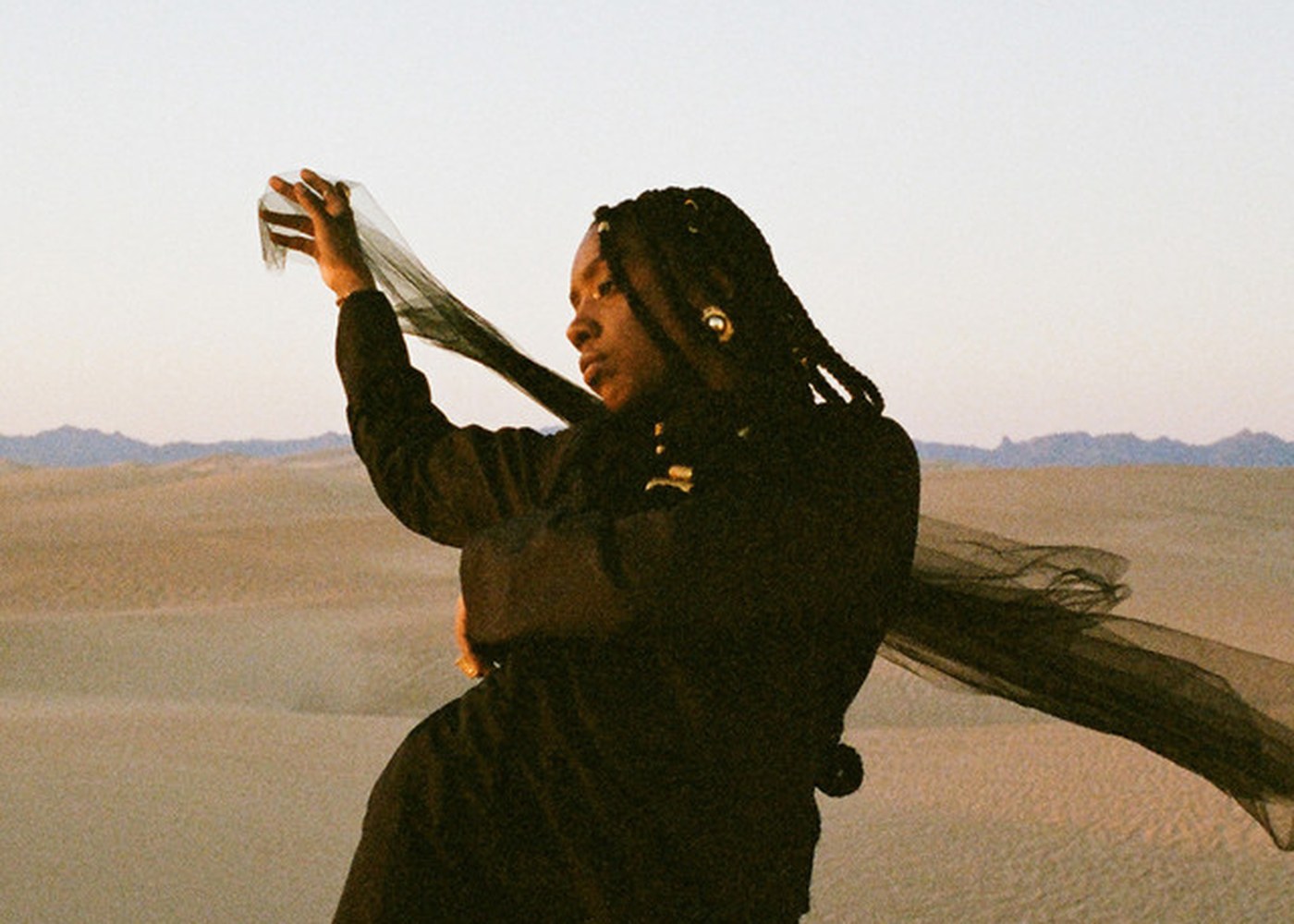
There's a specific kind of confidence that doesn't need to announce itself, it just radiates. "Firestorm" opens in that register. Dua Saleh isn't pleading or performing for anyone. They're already at the beach, already melting in the best possible way, already fully themselves before the song even asks for your attention.
The track builds a case for self-sovereignty, starting soft and sensual, then sharpening into something harder when it meets resistance. By the time the chorus lands, what started as an invitation has become a throne.
Verse 1
Ease before the heat
The opening is deliberately slow and indulgent. Palm trees, chocolate, the beachfront. Dua Saleh paints a scene of total ease, and crucially, they're not waiting for anyone to complete it.
"Send ya location / Baby, shake it / Impress me"
The ask is almost playful. Come find me, but know that the bar is set. "Impress me" does quiet work here. It flips the typical dynamic where the one being desired is the one who has to earn approval. Here, Saleh is already the judge.
By the time they say "I'm melting," it reads less like vulnerability and more like peak pleasure. This is someone fully at home in their own heat.
Pre-Chorus
The atmosphere shifts
The mood changes before the chorus earns its declaration. Something enters the air, literally and figuratively.
"Smoke, it's a fire / Burnt up tires / Something's in the air again"
The imagery is urgent and slightly dangerous. Burnt rubber, rising smoke, a scene that's moved past leisurely. "Spotted in the lot" suggests eyes on Saleh now, attention that carries tension. "Slow down, too hot" could be directed outward, at whoever's watching and getting overwhelmed, or inward, a beat of self-awareness about the kind of energy being brought.
"No need to compete" is the line that tips it. Someone in the vicinity feels threatened. Saleh's response is to not even acknowledge the competition as real.
Chorus
Crowned, not argued into it
The chorus doesn't build to confidence. It arrives already there.
"Your hate ain't phasing me / Sit down, take a seat / I'm the king of the hills"
What's striking is the sequence. Saleh names the hate directly and then immediately dismisses it, not with anger, but with boredom. The hostility in the room isn't a threat to survive. It's a mild inconvenience from someone who doesn't quite understand what they're looking at.
"King of the hills" is a full territorial claim. Not king of the moment or the party, but the landscape itself. And the way the line trails off, "king of the, ooh, king of the" feels less like an unfinished thought and more like Saleh deciding the title doesn't even need completing. You already know.
Verse 2
Pulling someone closer anyway
After claiming the crown, the second verse does something unexpected. Saleh turns toward the person watching and invites them in.
"Just come closer / Look at me / In the eyes / Just wanna, wanna / Crack you open"
"Hit me like / What's the motive?" reads like someone trying to process the pull they feel. They can't explain why they're drawn in. Saleh doesn't help them rationalize it, just says come closer. The desire here isn't soft. "Crack you open" is intense, almost surgical. It's not about vulnerability so much as seeing past whatever front someone is running.
There's also something interesting in Saleh admitting "I don't know" as a response to the question of motive. The attraction doesn't need a logical framework. It just is.
Outro
The declaration becomes a loop
The outro repeats the chorus without adding new words, and that's the point. The argument has already been made. What's left is just the fact of it, playing on loop because it doesn't need to go anywhere else.
Blazing body, unaffected by hate, king of the hills. It doesn't escalate because it doesn't have to. The song ends where the chorus put it, which is exactly where Saleh intended to stay.
Conclusion
"Firestorm" opens with ease and closes with ownership, and the through line is that Dua Saleh never needed external permission for either. The heat was always theirs. What the song figures out by the end is that the people orbiting, watching, hating, competing, are just proof of the temperature Saleh is already running at. The fire doesn't exist because of them. They exist because of the fire.




Comments
Loading comments…