

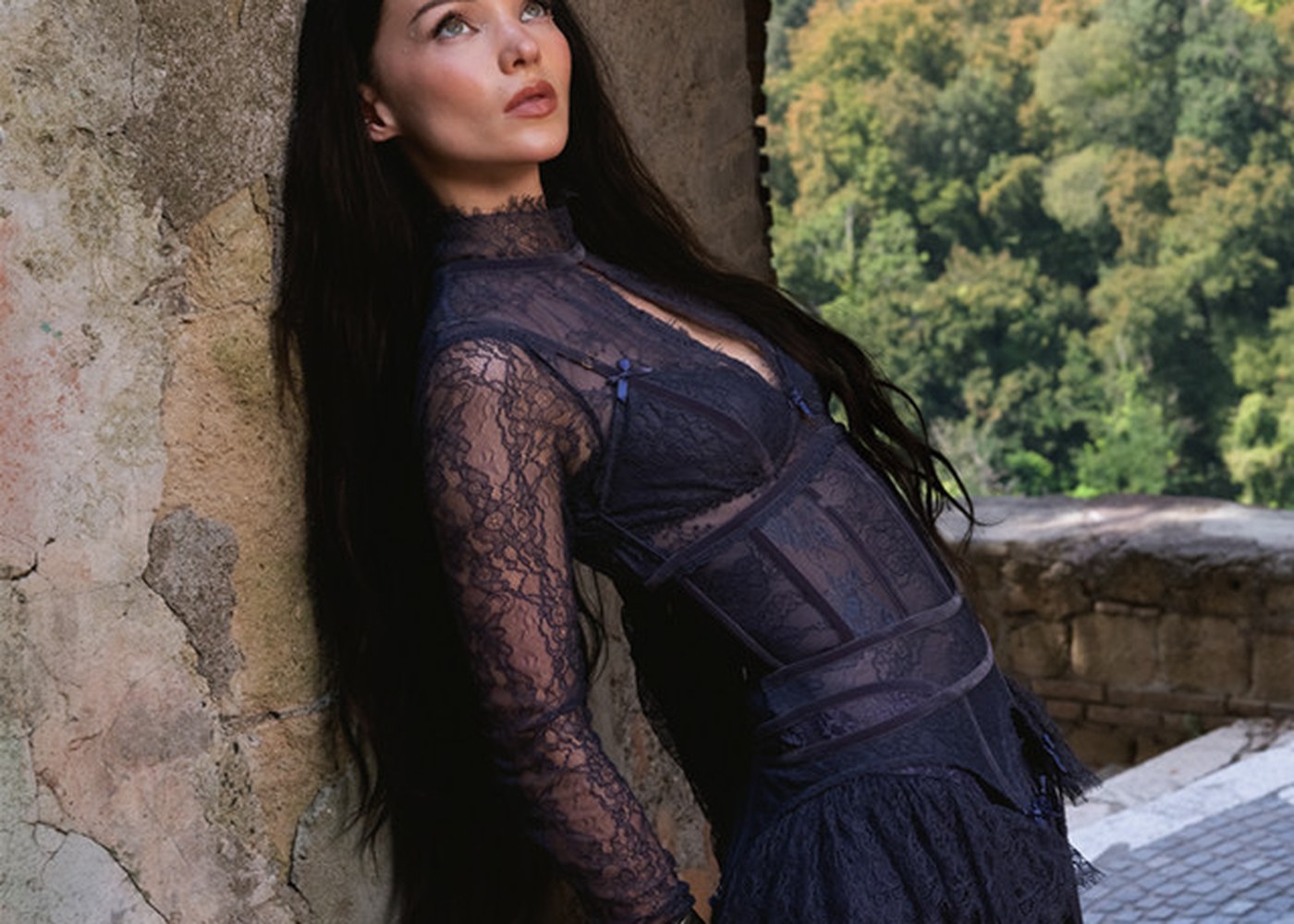
Most songs about summer lust stay safely in the fantasy. They give you the heat, the sun, the loose and golden feeling of wanting someone, and then they wrap it up before anything gets complicated. "When In Rome" does all of that and then, just once, goes somewhere those songs are too polite to go.
The song's central argument is deceptively simple: the right place and the right person and the right amount of cherry wine can make the wildest things sound reasonable. Marriage. A home. Eternity. The chorus throws those words out with a laugh baked right in, "ha, ha, ha," like the narrator knows how big they're swinging and finds it a little funny. But the bridge makes clear this isn't just vacation brain talking. The wanting here is total. It wants to consume.
The Body Before the Feelings
The first verse doesn't open with an emotion. It opens with a sensation: salt air, red cheeks, wet skin from jet-black hair. The physical world comes in first and the feelings have to catch up, which is exactly what it feels like to be overwhelmed by someone.
"Your tongue memorizing all my teeth / My top, your jeans"
"Memorizing" is doing something specific there. Memorizing implies intention, care, the act of learning something you plan to keep. And then the camera cuts to clothes, which is one of the more economical ways a lyric has ever said what it's saying without saying it. The verse ends with "when you touch me there," and honestly, the restraint is almost funny given what comes later. Almost.
The olive tree prayer floating above all this skin and salt keeps the scene from feeling purely carnal. It gives the moment a kind of reverence. Something about this afternoon feels sacred, even while it's reckless.
The Chorus Playing Pretend (Or Not)
"Why don't we get married, build a home?" is the kind of thing people say on perfect afternoons and half-mean, and the laugh that follows it in the chorus knows that. The song lets the narrator have it both ways: the feeling is real, the words are slightly absurd, and the joke is that those two things aren't mutually exclusive.
"Something in the summertime / Maybe all the cherry wine"
The narrator offers the wine as an explanation, then immediately undermines it by wanting to take off their clothes. The cherry wine isn't causing this. It's just the narrator's one diplomatic gesture toward plausible deniability. The chorus is a marriage proposal wrapped in a laugh wrapped in lust, and the three layers are all doing their jobs at once.
Verse Two: The Evidence of a Life
The second verse goes somewhere the first one doesn't. It gets tender in a way that's harder to write off as heat-of-the-moment desire.
"Freckles, smile lines / My face showing evidence of life"
The narrator is looking at themselves here, noticed through the other person's attention. Smile lines aren't usually the stuff of pop romance, but the song lets them be beautiful. Then comes the line that tips the chorus from playful to loaded: "What you doing, babe, for the rest of your days?" That question, asked at a Roman fountain by someone dripping wet, is the entire emotional reason the chorus hits as hard as it does the second time around. It's still probably a joke. It's probably not a joke.
The Bridge, Which Is the Whole Point
Everything before the bridge is lush and a little sunstruck. The bridge is something else entirely.
"I think I love you so much, I wanna be you / Crush you into powder so that I can breathe you"
That image is feral. It's also one of the most accurate descriptions of extreme desire that pop music has produced recently, the specific wanting to dissolve the boundary between yourself and the person you love until there's no meaningful separation. Not to possess them. To become them. To inhale them. The "ha" that floats after it is the narrator catching themselves, aware of how far they've gone.
The line I keep coming back to is "crush you into powder." It's violent and intimate and completely unsentimental. After two verses of salt and cherry wine and fizzy Roman fantasy, the bridge drops the softness and shows what's underneath. The feeling was never casual. It was enormous and it was waiting for a verse to crack open.
You could read the bridge as pure hyperbole, the language of someone giddy and drunk on a perfect day. That reading is fair. But it's hard to unhear as a confession of something deeper once the song is over.
What the Song Leaves You With
"When In Rome" is a summer romance song that trusts its own extremity. It doesn't have to choose between weightless and obsessive, between the laughing chorus and the annihilating bridge. Both are true. The person making marriage jokes at a fountain is the same person who wants to breathe someone in like powder, and the song holds both versions without flinching.
The setting, Rome, the wine, the heat, gives the narrator permission to want things they might otherwise keep quiet. But the bridge makes clear this wanting doesn't belong to the vacation. It belongs to them. The cherry wine just loosened the door.
Lyric analysis powered by Scalpel.

Comments
Loading comments…