

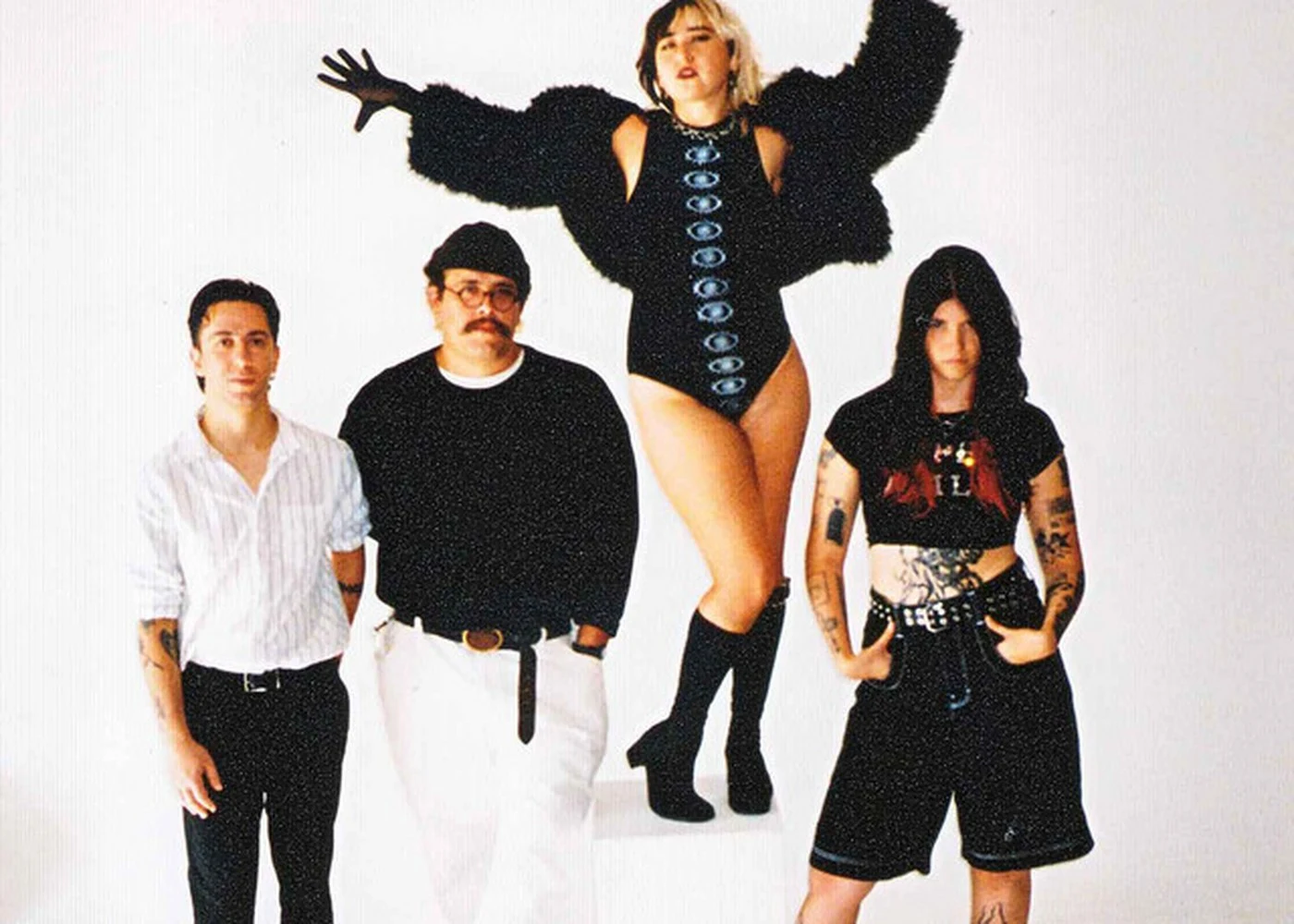
"Strings of Fate" is a song about the moment you realize that staying still inside your pain has become its own kind of harm. The narrator is tangled up with someone they love, watching that person suffer, and the song works out what it costs to keep waiting versus what it takes to finally move. That tension is not ambiguous here. The song picks a side.
Fate as a Thing You're Holding, Not Carrying You
The opening image is easy to misread as romantic. "i see your fate wrapped in mine" sounds like two destinies braided together by some external force, destiny doing the work so the narrator doesn't have to. But the song immediately undercuts that comfort. The narrator "grasps" at right and wrong, they're wrestling with control, and the light they reference is one the hermit holds above, a solitary figure walking in self-imposed isolation. These are not images of two people swept together. They're images of one person trying to figure out what their involvement with another is actually doing.
"i see your fate wrapped in mine" sets up the central problem: the connection feels cosmic, but the narrator is still the one holding it. That means they're responsible for what comes next.
Pulling Roots While Asking You to Bloom
The sharpest line in the song arrives early and without ceremony.
"pulling roots while asking you to bloom"
This is a direct indictment of a behavior pattern where someone destabilizes another person while simultaneously demanding growth from them. It could be about how the person the narrator loves has been treated by someone else. It could be a moment of self-examination where the narrator wonders if their own control and anxiety is doing the same thing. Either reading stings, and the song doesn't fully resolve which one it means. That's the one place I'd say the lyric stays genuinely open.
What it nails is the specific cruelty of that contradiction: expecting someone to flourish when you've already undermined the conditions for it. Liars making up their own truth is the same mechanism, a person rewriting reality to make their damage look like care.
The Chorus as Refusal
"I can't wait in the dark anymore" is not a complaint. It's a decision. The repetition is the point. Each time it lands, it's more resolved than the last, the narrator talking themselves into the door.
Concrete taken by vines. Every wound heals with time. Breaking pavement to find what life's been left behind. These lines do not describe passive recovery. Vines breaking pavement are aggressive, persistent, alive in a way that disrupts what has hardened. The song is insisting that healing has agency and direction. It grows through the damage rather than around it.
If you're on a commute or at 2am with headphones on, this chorus is the part that hits your sternum, because it names the exhaustion of staying in a place that isn't getting better.
Once You Stop Breathing Through Your Sores
The bridge is where the song earns everything it built toward.
"spikes and thorns can lead you to the scent of a rose / once you stop breathing through your sores"
That second line is brutal in the best way. Breathing through your sores is what happens when pain has been in place so long you've adapted your whole respiratory system around it. You've made the wound functional. The song says: stop. Not because the pain is gone, but because using it as your primary way of moving through the world is keeping you from anything else.
"Love again grows" follows immediately, three words with no elaboration. The song doesn't oversell the promise. It just states it and moves on, which is exactly the right call. Overstaying that moment would make it into a speech. This way it feels like a fact.
Stars, Eyes, and What Gets Passed Forward
The final movement pulls outward in the most surprising way the song makes.
"the stars that shine might be just a memory now / their lives live on in your eyes"
Dead stars that still appear to shine because their light has been traveling toward us for thousands of years. The person the narrator loves carries something forward the same way, holding the light of people or versions of themselves that no longer exist. "Someday you'll be in someone's gaze" extends that logic into the future: what you carry will eventually be what you become for someone else.
It's a generous and specific way to frame survival. Not that the person will heal and return to normal, but that they will become a source of light for someone else, that the survival itself is generative. That framing is what makes the chorus land differently the final time around. Waiting in the dark isn't just bad for you. It delays something you're meant to pass forward.
"Strings of Fate" ends up being less about two people's destinies being linked and more about one person recognizing that love, real love, moves. It acts. It breaks pavement. The strings of fate that open the song are not chains. They're a reason to get up.
Frequently Asked Questions
What is "Strings of Fate" by Destroy Boys about?
"Strings of Fate" is about the decision to stop waiting passively inside pain and start actively moving through it. The narrator is entangled with someone they love who is suffering, and the song works through what it means to care for someone without enabling stagnation, ultimately arguing that real healing has agency and direction rather than just endurance.
What does "pulling roots while asking you to bloom" mean in "Strings of Fate"?
The line captures a specific contradiction: destabilizing someone, whether through control, manipulation, or constant upheaval, while still expecting them to grow and thrive. It could describe how the person the narrator loves has been treated by someone else, or it could be the narrator turning that criticism on their own behavior. The song leaves both readings open.
What does "once you stop breathing through your sores" mean?
It describes the state of adapting so completely to long-term pain that you've built your entire way of functioning around it, using the wound as infrastructure. The song argues that this kind of adaptation, however understandable, keeps you from reaching anything beyond the pain. Stopping means withdrawing the wound from the center of how you survive, not denying it existed.
Lyric analysis powered by Scalpel.


Comments
Loading comments…