

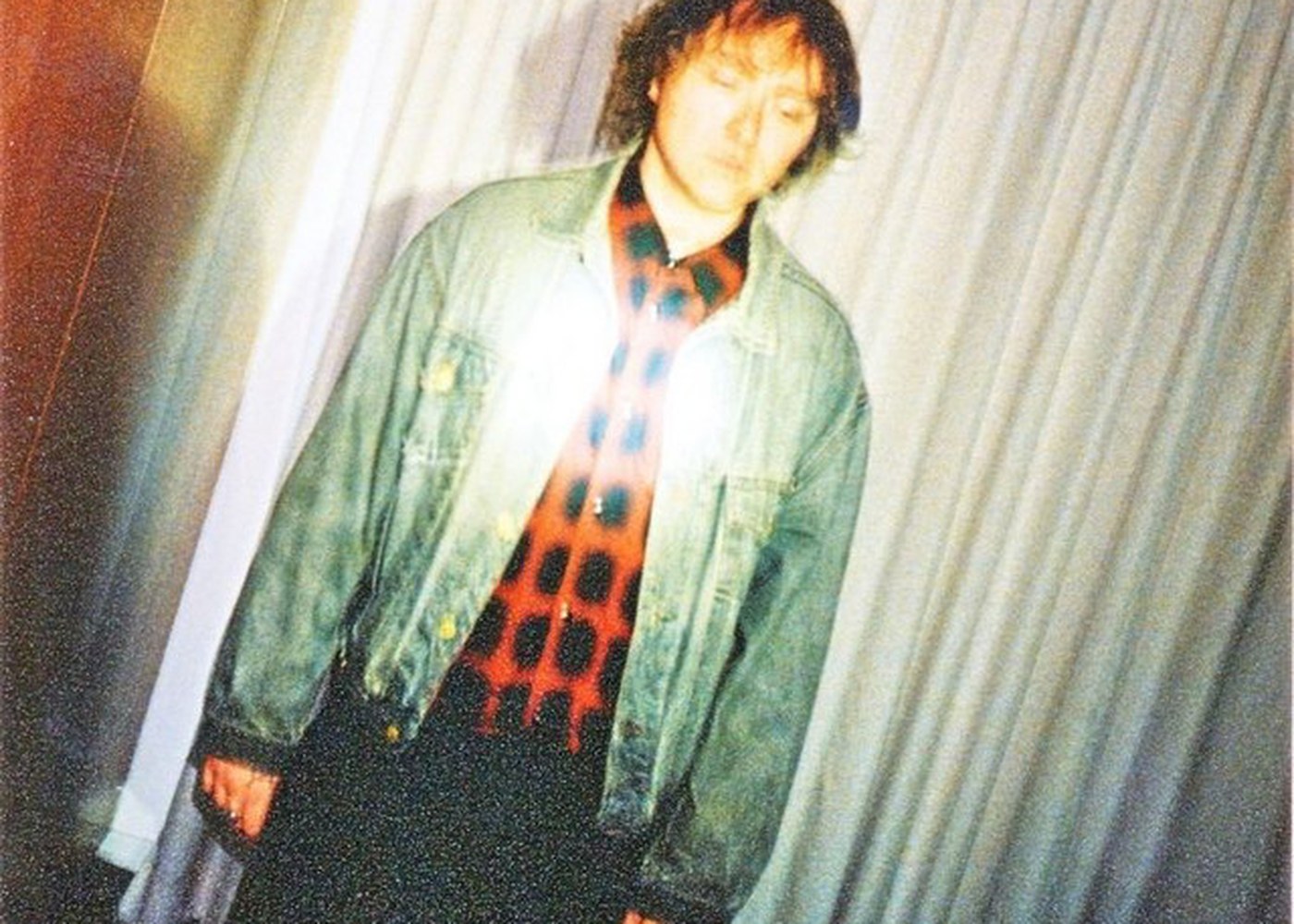
A porch light, a street full of plastic masks, and a voice you never heard coming, close enough to feel on your neck: "I am right behind you." Current Joys opens "HALLOWEEN" with a line that could come from a guardian or a stalker, and the rest of the song never settles which one it is. On the surface it is a numb, wounded person begging someone not to leave on the one night when everybody's guard is down. Underneath, it is about wanting to look at someone completely while staying invisible yourself, and about how fast that wish curdles into a spell meant to keep them.
The plea and the one face that stays hidden
The first verse sounds like a confession you'd make at the end of a party, leaning on a doorframe, trying to get the words out before the other person finds their coat. The narrator says their heart has gone numb from years of pain, and that something in this person's eyes makes them feel free, which is a sweet thing to say and a lot of weight to put on a stranger's face.
"And no one can hide their eyes on Halloween / Except me"
Think about what a costume actually does. On Halloween everyone wears a mask, so you'd expect the eyes to be the only honest part left, the one thing peeking out through the holes. The narrator claims that rule for everyone else and exempts themselves, which means they get to read every face in the room while keeping their own unreadable. That is the whole fantasy of the song in two lines: total access to someone else, zero exposure for you.
And the numbness explains why. Someone who has been hurt for years wants intimacy on terms where nothing can be taken from them, and the narrator has found the holiday that seems to offer it. They aren't looking for love so much as a one-way window.
Time travel with a curfew
The second verse gets stranger, and admits more. Now those same eyes are "terrifying," and in the next breath the narrator insists everything is fine, because they have a superpower to fall back on.
"'Cause I can posses the spirits all through time / Dip through the past, but only for one night"
The narrator is reaching for the oldest Halloween idea there is, that the wall between the living and the dead goes thin, and turning it into a private comfort. If you can slip into the past, you can revisit the years of pain, or maybe replay this exact moment until you get it right. "Possess" is a tell, though. The narrator doesn't commune with spirits or meet them; they take them over, use them as tools to steady their nerves while staring into someone who scares them. Then comes the catch, "only for one night," capped with a clipped "This time," as if they've done this before and it didn't hold. The magic has an expiration date. Remember that.
The bridge: the spell takes over the song
Then a different voice steps in, credited to Sophie Appel, and the begging stops. What replaces it is an incantation, a call to the spirits to "unlock my power" and "come through in this hour," delivered with the calm of someone who already knows how this ends. The narrator spent two verses explaining themselves. The spell doesn't explain anything.
"Don't fear me now, let love ignite"
Put that next to the verse that came just before it. The narrator confessed the other person's eyes were terrifying, and the spell answers by telling the other person not to be afraid, flipping the fear onto them and then soothing it away. It's the move of someone who wants comfort and control at once. Nobody in the song stops to notice that a binding spell has quietly replaced the act of asking, and that's the creepiest thing about it.
The spell also redraws who is doing the looking. "In my gaze, your heart finds a home" puts the beloved inside the caster's eyes, held there, housed there. All that hunger to watch without being watched has found its perfect form: a gaze that doesn't just see someone but keeps them. And the line that follows gives away the motive, "where love resides and I am never alone." The spell exists to solve the caster's loneliness, and the other person is the material.
I'll admit the bridge leaves room for a different reading, one a lot of fans probably hold. If the second voice belongs to the person with the terrifying eyes, then they're the one casting, and the narrator is the target, which would explain why freedom turns to weakness by the next verse. I lean the other way, toward the spell as the narrator's wish given a voice, but the song doesn't nail that door shut.
Free becomes weak
The third verse rhymes with the first almost word for word, which makes the changes stand out. "Before you walk away" returns, but now the ask is "give me your hand," the only physical touch anyone requests in the whole song, and the eyes that once made the narrator "feel free" now make them "feel weak." Whatever happened during the spell, the narrator came out of it more entangled, not less. The chorus line about hidden eyes returns unchanged, still claiming the exemption, even though it's clearly costing them.
"Forever mine," signed with a greeting card
The outro belongs to the spell again, and it goes full sleepover-witch: "By the power times three," repeated like a chant three kids learned off TV and are saying a little too seriously in the dark. It would be funny if the words weren't so possessive. "Forever mine" lands right on top of the narrator's earlier promise of "only for one night," and the song never reconciles them, because the one-night magic was always a cover story for something meant to last.
But then the whole ritual closes on "Happy Halloween." After summoning spirits and binding two souls "through space and time," the spell signs off with the cheeriest phrase on the calendar. It's sweet. There's also a hook in it.
Conclusion
Go back to that opening voice, "I am right behind you," and it finally makes sense. The narrator has been behind this person the whole time, watching, unseen, using the one night of the year when everyone else's face is legible and theirs supposedly isn't. The song starts as a plea from someone too numb to risk being looked at and ends with a spell that removes the need to risk anything at all. The way I hear it, "HALLOWEEN" gets at something uncomfortable about loneliness: when you're hurt enough, wanting to be loved can quietly become wanting to own the person who sees you, without ever letting them see you back. The mask never comes off. That's the point.
Frequently Asked Questions
What is "HALLOWEEN" by Current Joys about?
The song follows a numb, lonely narrator begging someone not to walk away on Halloween night. It's about wanting to see someone fully while keeping yourself hidden, and a love spell in the bridge and outro turns that longing into something closer to possession.
What does "No one can hide their eyes on Halloween / Except me" mean?
On Halloween, masks cover faces but leave the eyes exposed, so everyone's eyes give them away. The narrator claims to be the one exception, which means they can read the person they're watching while keeping their own feelings hidden.
Who casts the love spell in Current Joys' "HALLOWEEN"?
The spell is sung by a second voice, credited to Sophie Appel, and the lyrics never say exactly who that voice represents. It can be heard as the narrator's wish spoken aloud, or as the beloved casting the spell on the narrator, which would explain why their eyes go from making the narrator feel free to making them feel weak.
Lyric analysis powered by Scalpel.


Comments
Loading comments…