

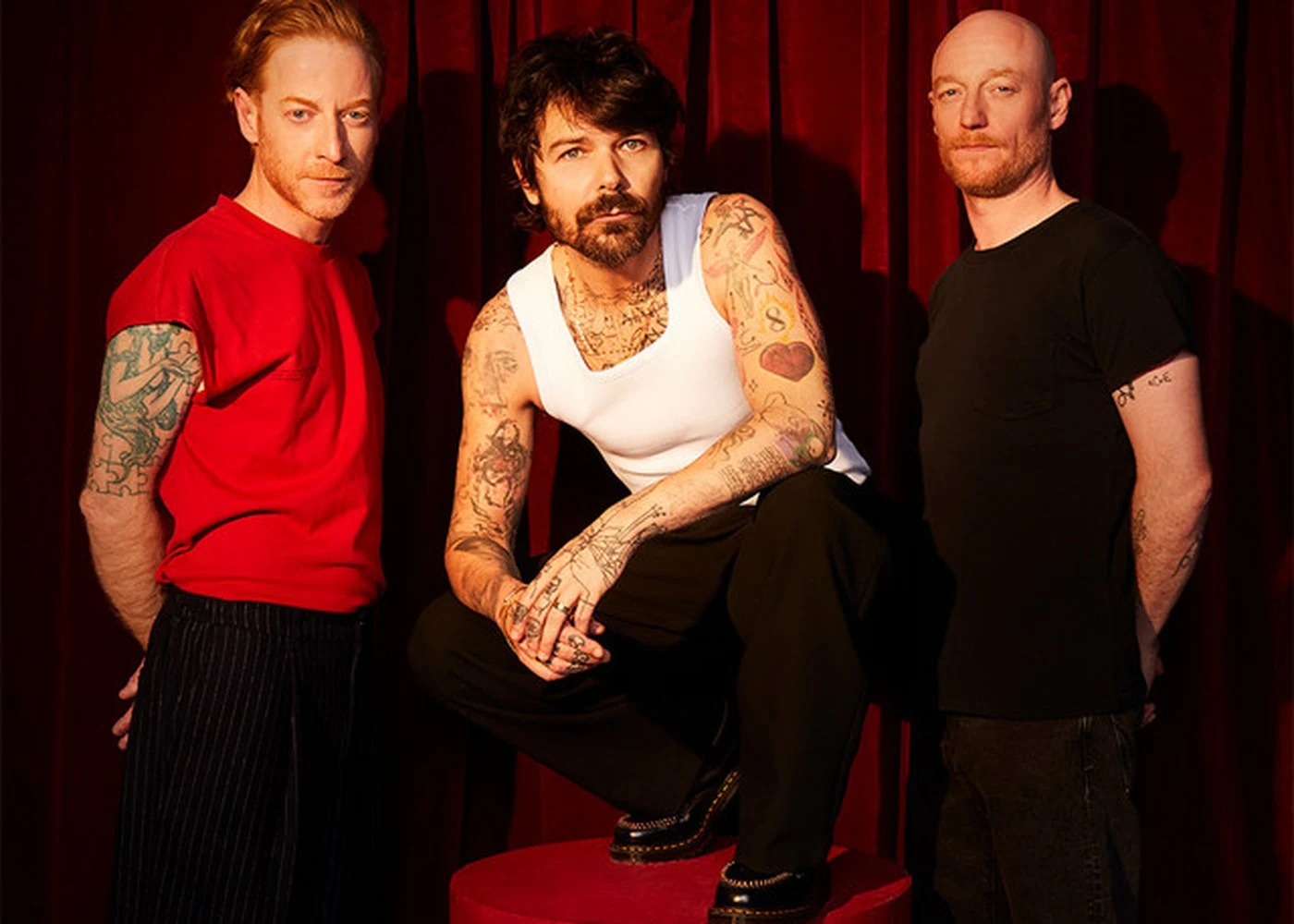
The chorus of "Many of Horror" makes a promise you could say at an altar: you and me 'til the end of time. Two lines later it says "When you hit me, hit me hard." Both are sung with the same open heart, and the song never flinches between them. The song is about a man who stays in a love that hurts him, and the trouble is how sure he is, not how much he doubts.
Verse 1: two kinds of knowing
It starts with someone saying "I love you boy." He answers right away.
"But I know you lie / I trust you all the same"
He doesn't waver. He knows. He just trusts anyway, and admits he can't explain it. That "I don't know why" is the only honest shrug in the whole song, and he never says anything like it again.
Then the bruises. "When my back is turned / My bruises shine." The back is the one part of yourself you can't see, the side you show someone as you walk away. So the marks are visible to everyone except him, glowing exactly when he isn't looking. He calls the whole thing "our broken fairytale," and the word "our" keeps him inside the story even as he admits it's cracked.
The chorus: a vow that promises nothing
The chorus swings big. "I still believe / It's you and me 'til the end of time." That "still" carries the weight of everything in the verse. He's heard the lie, seen the bruises, and believes anyway.
Look closely at the next couplet, though.
"When we collide we come together / If we don't we'll always be apart"
It sounds like a vow. It's nearly a tautology: if we touch, we're touching; if we don't, we aren't. It guarantees nothing. And the only kind of contact he can picture is a collision, two bodies hitting. There's no gentle version of these two in his head.
Which brings us to the line everyone asks about.
"I'll take a bruise, I know you're worth it / When you hit me, hit me hard"
Put it next to the opening. The same man who said "I know you lie" now says "I know you're worth it." He trusts his own knowing in two opposite directions, and he never notices the clash. The line I keep coming back to is the second half, because he moves from enduring pain to requesting it. "Hit me hard" is an instruction. If it's going to hurt, he wants it to count, to feel as big as the love he believes in.
Is the hitting literal? The lyric never settles it, and a fair fan could hear it as pure metaphor for emotional blows, the way a breakup hits. That reading softens the song a little. I don't think it changes the core, because either way he's choosing the impact and calling it proof.
Verse 2: sitting where the coins go
The second verse is stranger.
"Sitting in a wishing hole / Hoping it stays dry"
A wishing well only works with water at the bottom. He's sitting down there, where the coins land, hoping the water never comes. He's wishing against the very thing that makes the well a well, because the water that holds the wishes would also drown him. It's the cleanest picture of his bind in the whole song: he's inside the hope, and the hope could kill him.
"Feet cast in solid stone" finishes the thought. He can't climb out. He's set there like a statue in a fountain. Then "I got Gilligan's eyes," which might point to the castaway from the old sitcom, stranded and cheerful about it. The lyric won't confirm it, but the fit is uncomfortable: a man marooned, still squinting at the horizon like rescue is coming. If you've ever sat in the car outside someone's place with this on, knowing full well you're going back in, you already know that look.
The bridge: their words, his silence
For the first time, he quotes the other person.
"'Cause you said love / Was letting us go against what"
And then the grammar slips. Love was letting them go against what their future is for, and their future is "for many of horror." The phrase won't parse. Many of what? It sounds like a sentence that broke in half on the way out. The footing goes. Whatever the lover told him about love, it reached him as a warning about a future full of horror, and he repeats it twice like he's trying to make it make sense.
Then the chorus comes back. Word for word. Nothing changes. He's just heard that their future is horror, and he answers with "I still believe." The sameness carries the drama: new information arrives and bounces off.
Conclusion
Go back to that altar promise sitting two lines from "hit me hard." The song holds them together because he does. Doubt might have saved him. He had it once, in that "I don't know why," and then he traded it for certainty, and certainty is what keeps his feet in stone. The chorus lifts three times while the words stay exactly where they were, and to me that's the ache of the whole thing: a man singing louder each time so he doesn't have to hear himself.
Frequently Asked Questions
What is "Many of Horror" by Biffy Clyro about?
The song follows a narrator who stays in a painful relationship even though he knows his partner lies to him. He calls it a broken fairytale but insists it's "you and me 'til the end of time." His unshakable certainty that the love is worth it is what keeps him stuck.
What does "Sitting in a wishing hole, hoping it stays dry" mean?
The wishing hole is a wishing well, and the narrator is sitting at the bottom where the coins land. He hopes the water never comes, because it would drown him, even though a well needs water to hold any wishes. It pictures someone trapped inside his own hope, which the next line seals with feet "cast in solid stone."
What does "many of horror" mean in the song?
The phrase appears when the narrator repeats what his partner said love was, ending with "our future is for many of horror." It doesn't parse cleanly, which makes it sound like a warning that breaks apart as he tries to repeat it. After hearing that their future holds horror, he returns to the exact same chorus, showing the warning changes nothing.
Lyric analysis powered by Scalpel.
Comments
Loading comments…