

Introduction
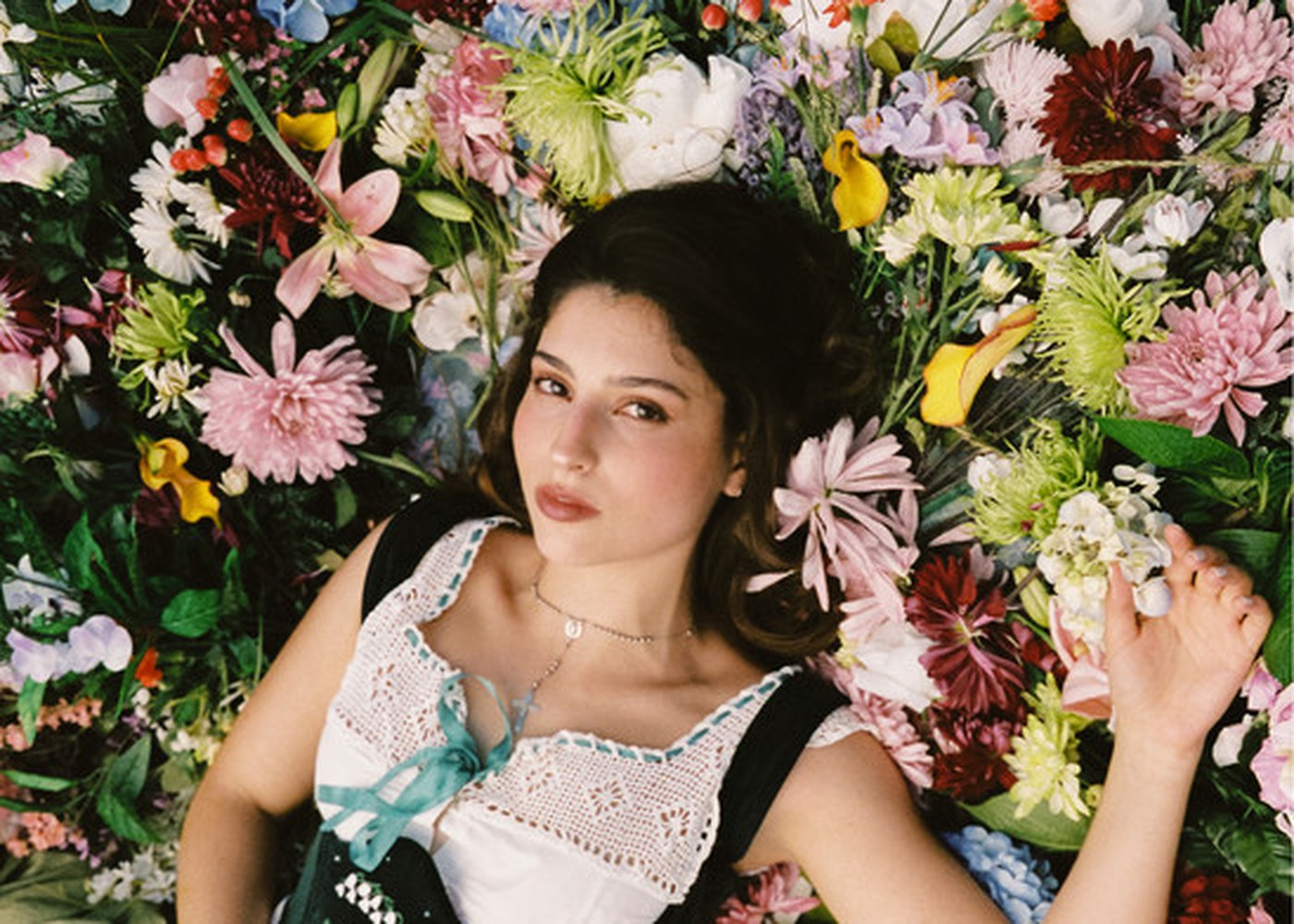
Most songs about the wild woman want to liberate her. They arrive with torches, with manifestos, with a fist raised toward something that wronged her. Andrea Bejar's "Wild Woman" does none of that. It watches. It stays soft and close, almost breathless, and in that restraint it says something rarer: that the wild woman doesn't need rescuing or defining. She only needs to be seen.
The song's thesis hides inside its tenderness. What looks like a simple, dreamy portrait is actually a radical act of witnessing, one that refuses to flatten its subject into a symbol.
The Dream as the Only Honest Address
The song opens not in waking life but in the space between sleep and knowing, which tells you everything about where the wild woman actually lives.
"See the wild woman dancing in your dreams"
She isn't summoned here. She already inhabits the dream. The narrator isn't inviting you to imagine her; they're pointing to where she has always been, moving in a place you only reach when your defenses are down. That location matters. The dream isn't escapism in this song. It's the only address honest enough to hold her.
And then the invitation: "See." Not understand. Not follow. Just see. It's a small word doing the work of an entire philosophy of attention.
She's in the Water, She Sees in Color
The verses build her in flashes of elemental image rather than biography, and that choice keeps her from being pinned down.
"She's in the water, she sees in color"
Water and color are both fluid, both resistant to fixed shape, and pairing them gives her a quality that belongs to perception as much as to nature. She doesn't just exist in color; she perceives it, actively, differently than the world around her might. There is a suggestion here that her way of seeing is itself wild, an excess of aliveness that most people have learned to dim.
The song never explains what the water means. It lets the image sit, and the listener's own associations flood in to fill it. That is the song doing its most deliberate work.
"She Loves You Softer"
Then comes the line I keep returning to, the one that quietly reorients the entire portrait.
"She loves you softer, she's someone's daughter"
"She loves you softer" is not a diminishment. In a song already committed to softness as its mode, the line deepens that softness into an act. Her love is not less; it is more deliberate, more attuned. It moves toward rather than over.
And then, immediately after: "she's someone's daughter." Four words that pull her back into the web of human relation, not to domesticate her but to refuse her mythology. She is not only archetype. She came from somewhere. Someone held her. The wild woman and the daughter are the same person, and the song holds both without letting either erase the other. That is the most precise thing the lyrics do.
What remains genuinely open is whether the narrator is addressing a specific person they love or speaking to a listener who has lost touch with their own wildness. The second reading would mean "you" is a mirror, not a witness, and the whole song folds inward. I'm not sure the lyrics answer that.
The Repetition as Ritual
The song returns again and again to the refrain, "See the wild woman," without adding explanation or expanding the picture. Repetition in another song might feel like padding. Here it functions as ceremony, the way a name spoken aloud in a particular tone becomes something more than identification.
Each return to the phrase deepens the quality of attention it asks for. By the last iteration, "see" has accumulated weight. The wild woman has not changed. The seeing has.
Conclusion
"Wild Woman" earns its tenderness by never mistaking softness for smallness. The portrait it builds, in water and color and a daughter's love, is a portrait of wholeness rather than freedom from constraint, because the song seems to understand that she was never constrained to begin with. She was only unseen. And the song's only task, the one it fulfills with extraordinary care, is to correct that. Not to celebrate her. Not to crown her. Just to look, and to ask you to look too.
Lyric analysis powered by Scalpel.



Comments
Loading comments…