

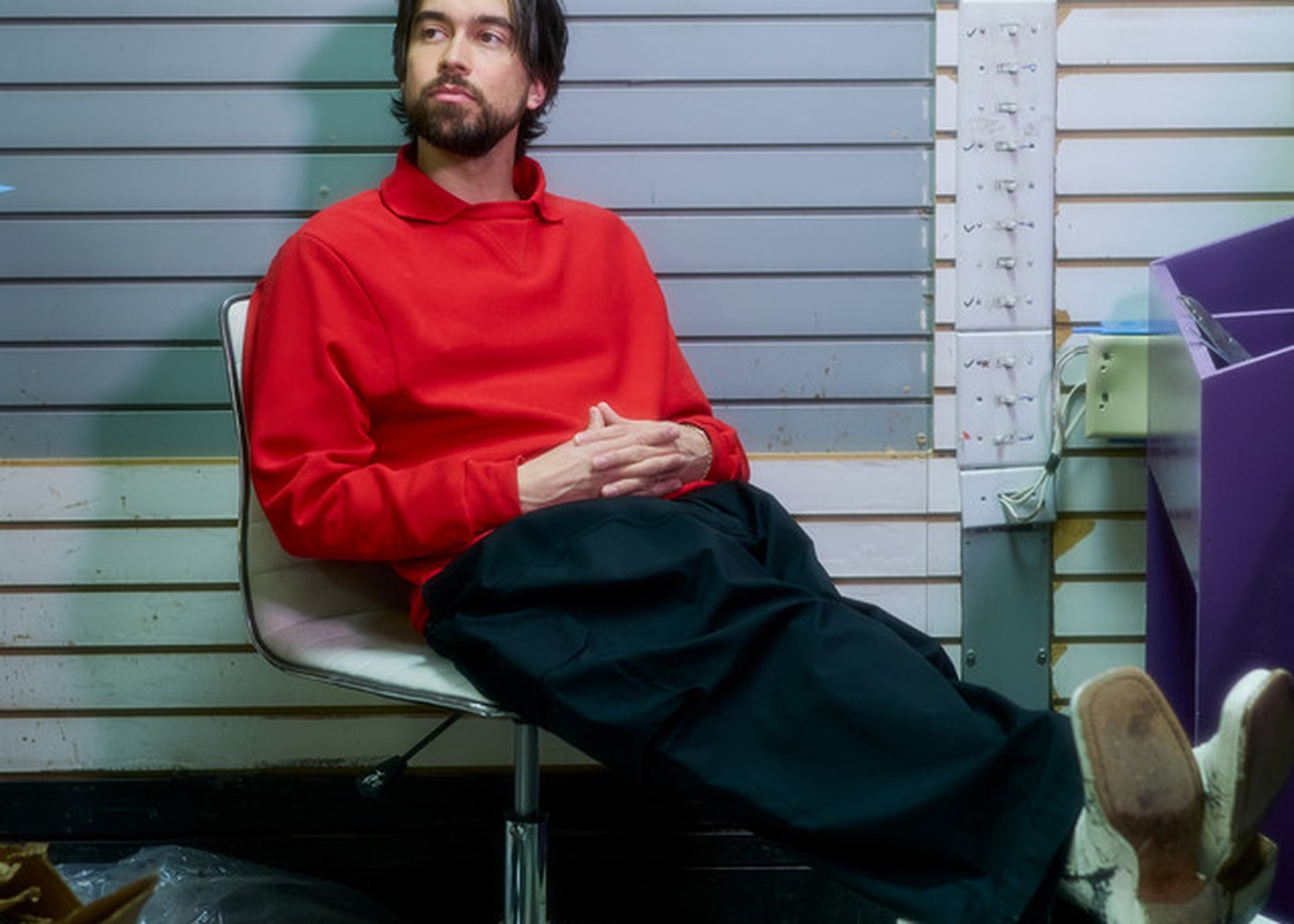
"June Guitar" is about the night after someone pulls away, when the narrator can't tell falling from finally letting go. The rope at the start of the song works as a swing, and the narrator wants the lost person back on it, swinging low. The chorus begs "don't make me" over and over and never says make me what.
Introduction
"I swung so freely." Read that right after "End of my rope" and the whole song tilts. A phrase built for despair suddenly has a playground in it, legs kicking, stomach dropping on the downswing. The narrator of "June Guitar" is heartbroken, sure, but the song spends its time loose and weightless rather than collapsed, and the one thing it refuses to do is finish its own sentence.
Verse 1: the rope becomes a swing
"End of my rope, I / I swung so freely / I felt my gravity"
The idiom says you're out of options. The verb says you're having fun. That stutter on "I / I" is the narrator catching between the two, and "so freely" wins. Being at the end of the rope means having the most room to move. Then gravity shows up, and it's personal: "my gravity," a pull felt in the body for the first time.
What the narrator feels next is company. Someone is "down there swingin' low with me." Two people at the bottom of the arc, together. Then they turn away, and the verse goes physical in a hurry.
"Felt something slippin' / Some fabric rippin'"
It could be the rope fraying, or a sleeve catching, or nothing you could point to at all. The song doesn't care which. What matters is the sequence, because the person turns, the hold loosens, and the narrator's response to the tear is to want them back in the low place, first "down there" and then, by the end of the verse, "down here."
A reasonable listener hears a noose in all this, and "end of my days" in the second verse gives them ammunition. I'd push back on that reading but I'd never call it wrong. The song keeps both pictures in frame on purpose, and the lightness of "swung" is what makes the darker shape so unsettling.
The voice in the parentheses
"Baby, I want to, I want to be near you / With you every day." These lines wander in from some sweeter, simpler song. They have none of the rope and none of the ripping. Whether it's the narrator's younger self, the other person, or just the wish said plainly, it sits in brackets like something muttered under the breath.
The chorus shrugs, then stalls
"Love ain't for the young anyhow / Something that you learn from fallin' down"
That "anyhow" is a shrug word stapled onto a grand pronouncement. The narrator wants to sound world-weary, like someone who's earned the right to say love belongs to grown-ups. But look at the lesson offered as proof. Learning by falling down is the most childlike thing there is. Kids learn to walk that way. Kids learn swings that way.
So the claim undercuts itself. The narrator says love isn't for the young while describing love in the exact terms of a kid scraping a knee. Being young is the point here, and the narrator just hasn't noticed. Then the chorus hits "Don't make me" three times and goes nowhere. Don't make me leave, don't make me let go, don't make me climb back up. Pick one. The song won't.
Verse 2: it came back to me
The second verse rhymes with the first and then drifts. "End of my days, I / I spoke so freely." Same stutter, same freedom, only now it's talking instead of swinging, and "what's left was reelin'," the feelings already "faded." The narrator is running out of what's left of the thing.
Then comes the call: "Red head, come on down and swing it with me," twice. Hair color, a nickname, maybe an actual name. Could also just be someone with red hair who happened to be standing nearby, honestly, and nobody needs to start a forum thread about it. The plea is the same one from verse one, made louder and more specific.
"It came back to me / Yeah, you were hidin' / Then you were laughin'"
The line I keep coming back to is this one, because the memory that surfaces isn't sad at all. It's a game. Someone hiding, then breaking into laughter, the whole thing over in two lines and warm the entire time. After a verse of fading and reeling, the narrator retrieves the plainest, happiest thing two people can do together, and it's basically hide-and-seek.
And notice the slide. Verse one wanted the person "down there." Now the narrator wants them "down here." The low place has stopped being somewhere the other person is and become the place the narrator has landed. The fall happened. This is what the bottom looks like, and it has a laughing face in it.
Conclusion
By the last chorus, "Don't make me" goes from three repetitions to five. The plea grows and its object never arrives. Finishing the sentence would mean naming the thing being forced, whether that's climbing off the swing or admitting the other person is gone, and the narrator keeps that verb in their mouth, unsaid. The song ends at the bottom of the arc, refusing to be pushed back up, still asking someone to come down and swing.
Frequently Asked Questions
What is "June Guitar" by Alex G about?
The song follows a narrator at the end of their rope after someone turns away from them. It uses the image of swinging to make heartbreak feel loose and childlike, and the narrator keeps asking the lost person to come back down and swing low with them.
What does "Love ain't for the young anyhow, something that you learn from fallin' down" mean?
The narrator tries to sound weary, claiming love belongs to people who've been hurt. But learning by falling down is how children learn, so the line contradicts itself and shows the narrator is more innocent than they want to admit.
Why does the chorus of "June Guitar" repeat "Don't make me" without finishing?
The narrator never says what they don't want to be made to do, whether that's letting go, leaving, or accepting the loss. The repetition grows from three times to five, so the unfinished plea becomes a refusal in itself.
Lyric analysis powered by Scalpel.



Comments
Loading comments…