

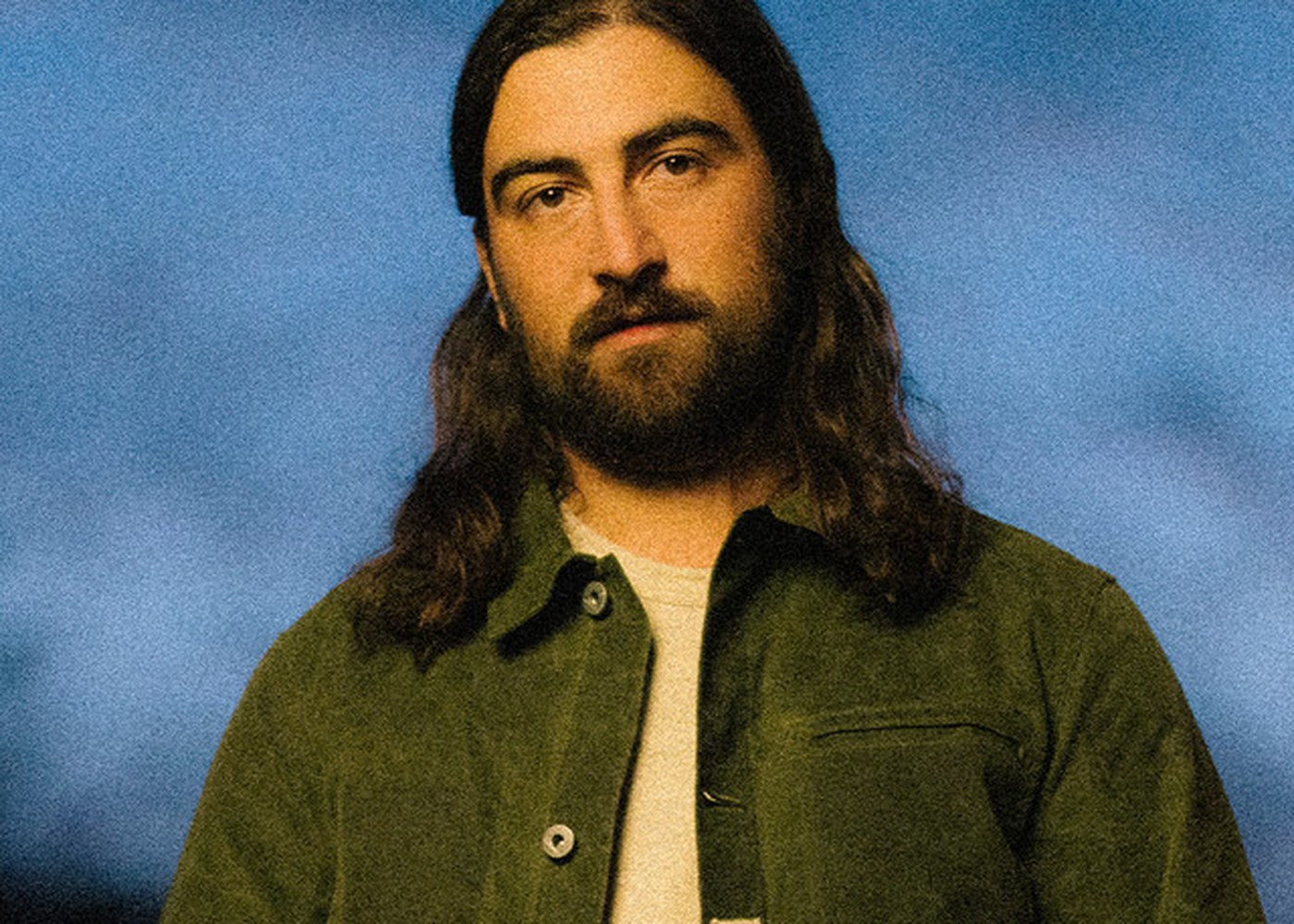
There's a particular kind of stuck that only makes sense if you've grown up somewhere small. Not stuck in a dramatic way. Stuck in the way where you're driving the same roads with the same people and the years are just kind of happening to you. "End of August" lives entirely inside that feeling. Kahan isn't dramatizing a breakdown or a departure. He's just being ruthlessly honest about what it looks like when a place and a person are both running out of something.
Verse 1: old friends who've stopped telling each other the truth
Familiar roads, unfamiliar restlessness
The song opens with two real names, Richie and Austen, which immediately pulls you out of metaphor and into something that feels like memory. These aren't characters. They're people who know this drive so well they don't need to narrate it. That silence between old friends isn't comfortable intimacy. It's the silence of people who've run out of new things to say.
"If these trees started talkin', I bet you they'd only talk shit / 'Cause we never do anythin' real, we just talk about it"
That's a brutal self-indictment delivered casually, which makes it land harder. Kahan isn't angry about this. He's just clocked it. The season is ending, the bugs are dying, the neighbors are voting for the same losing candidate, and everyone is performing a version of forward motion without actually going anywhere.
Then the personal stuff arrives without fanfare: getting older, sobriety, trying again. Each line is short and plainspoken, like Kahan doesn't want to make a big deal out of things that are actually a big deal. That restraint is what gives the verse its weight.
Chorus: when the whole landscape becomes a slow goodbye
Decline framed as inevitability
The chorus is where the song zooms out. What was personal in the verse becomes geological.
"Oh, everythin' you see out here will die / Oh, it's a matter of time / 'Til it's fields of ice and reflector lights"
This isn't nihilism exactly. It's more like Kahan extending the same unsentimental honesty from the verse onto the landscape itself. The town is going the way of everything. The reflector lights on an empty road are the perfect image for it: functional, cold, marking a path that fewer and fewer people are taking. And then that final phrase, "'Til it's our town," lands with an ambiguity that the song earns. Our town as in ours to own. Or our town as in this is what becomes of us.
Verse 2: knowing every shortcut but still planning your escape
Loyalty as a kind of trap
The second verse shifts from observation to action, and the action is almost entirely about loyalty. Rides home, alibis, knowing which traffic light you can run because the camera's broken. Kahan knows the texture of this place at a granular level, and he uses that knowledge to take care of people.
"I follow New York plates to the county line / I ignore 'em when they wave on 89"
There's a quiet resentment in those lines. The out-of-towners come through, wave politely, leave. He stays. And then the turn that reframes the whole verse: the minute September hits, he's going off his medication. He names it plainly. "Late August angst and a pointless night" gives way to something that feels, however briefly, like being alive again. It's a complicated admission. The instability of this time of year, the recklessness even, is the most present he's felt in a long time. He's not recommending it. He's just telling you the truth.
Bridge: what extraction leaves behind for generations
A place reduced to an image
The bridge is the most devastating stretch of the song, and it works because it never raises its voice.
"Drawin' of a place, oh, we're a photo on the fridge"
A drawing, a photo. Decorative. Past tense even while still present. Then the copper mining image: something was extracted here until there was nothing left to take, and what remains is a cycle that sustains itself only by continuing.
"It's a place where most kids / Just grow up and have kids / Who grow up and have kids / Who build homes for the rich"
The repetition in those lines does something structural. It mimics the cycle it's describing. Generation over generation, same motion, same result, and the only beneficiaries are people who don't actually live there. Kahan doesn't editorialize. He just stacks the facts until the weight is obvious.
Post-Chorus
Ownership as acceptance
After the final chorus repeats its vision of slow erasure, the post-chorus does something unexpected. Instead of fading on loss, it pivots.
"'Til it's our town / And it's ours now / 'Cause it's ours now"
The shift from "'til" to "'cause" is everything. What started as a prediction of decline becomes a claim. Not defiance exactly. More like the decision to stop bracing for what's coming and just hold onto what's still here. It doesn't undo the sadness in the bridge. It just refuses to end there.
A zip code and a shadow that follows him out
A zip code. A shadow.
The song closes on two things: a zip code and a long shadow. No explanation, no resolution. The zip code roots everything that came before in an actual place, a specific community. The shadow suggests that what this place has given, and taken, will follow wherever Kahan goes. It's the quietest possible ending to a song that's been quietly devastating the whole way through.
Loving a place clearly enough to claim it anyway
"End of August" is about loving something you can also see clearly. Kahan doesn't romanticize his hometown or condemn it. He just looks at it the way you look at something you've known your whole life: with total familiarity and the particular ache of knowing it's changing, or that it already has. The question the song opens with, what does getting older actually mean, never gets a clean answer. But by the end, the claim of ownership feels like the most honest response available. It's ours. Even now. Even like this.


Comments
Loading comments…