


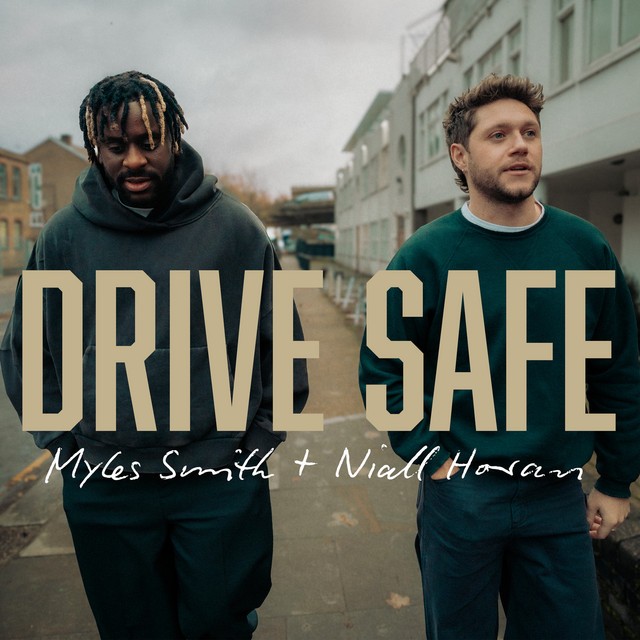
“Drive Safe” opens the car door on a parting that feels tender rather than tense. Myles Smith and Niall Horan sing from opposite ends of the same driveway, turning practical advice into an emotional compass. The road becomes a metaphor for growth, uncertainty, and the fragile hope that care can outlive proximity.
Verse 1: release framed as love not defeat
“Watching you walk away / So sad to see you go”
Smith starts with a slow-motion farewell, observing the physical act of leaving. The sadness is naked but not possessive; it honors the other person’s agency.
“I know that people change / And I know for us to grow, we gotta let go”
Here the narrator accepts evolution as a fact, framing release as an act of love, not defeat. The broader theme is maturation: real connection allows room for drift.
Chorus: a roadside blessing for the unknown ahead
“Follow your heart, wherever it takes you… / Life is a road, don’t know what’s along the way / So drive safe”
The chorus shifts from observation to benediction. A familiar cliché—follow your heart—gains heft when paired with the warning to “drive safe.” Risk is acknowledged, even expected, yet the blessing persists. It turns the song into a roadside shrine to resilience.
Verse 2: home redefined as emotional bedrock
“We can be worlds apart / But I’ll always be your home”
Horan counterbalances distance with permanence. Home is redefined as an emotional constant, not a postal code.
“Feelings and seasons change / But our love is set in stone”
The speaker distinguishes between surface weather and bedrock. This contrast widens the theme from personal breakup to universal impermanence versus core devotion.
Bridge: anxiety cracking the stoic surface
“I don’t feel like running when I can’t escape / And the walls are crumbling, I can see your face”
The bridge dives into anxiety. When escape feels impossible, memory becomes a lifeline, suggesting that the other’s presence is portable. The plea for reassurance—“It’s gonna be okay”—exposes vulnerability beneath earlier stoicism.
Post-Chorus
“Ah, ooh… And drive safe”
Wordless vowels stretch like tail-lights fading into fog. The repeated instruction becomes a mantra, signaling that sometimes care sounds best without full sentences.
Fear and faith idling at the same intersection
“Drive Safe” is equal parts caution sign and love letter. By framing departure as a shared rite of passage, Smith and Horan argue that the truest affection isn’t about holding on—it’s about wanting the other to reach their destination in one piece. The song leaves the listener idling at the intersection of fear and faith, with just enough gasoline to choose the next turn.



Comments
Loading comments…