Introduction
A cat rewrites everything
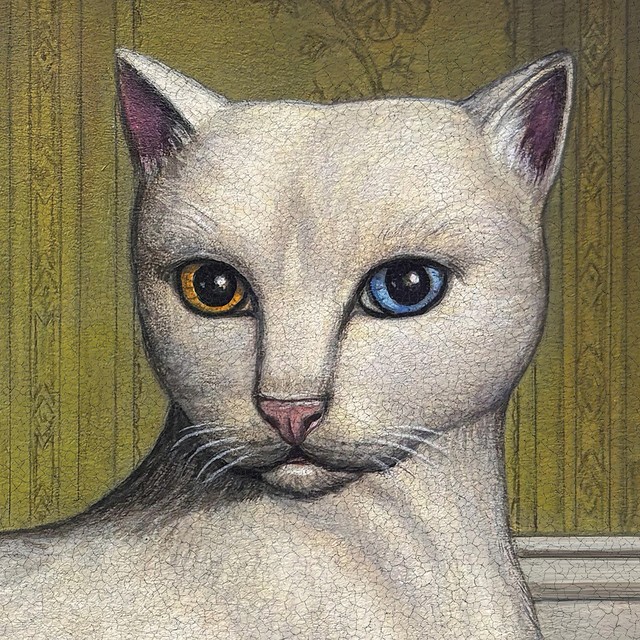
There's something almost funny about the setup: Mitski spots a white cat outside her window, casually claiming her house as his own. But the laugh catches in your throat almost immediately, because the song uses that one small act of feline indifference to crack open a question that most of us spend our whole lives trying not to ask out loud. If ownership is a fiction, if everything eventually leaves or gets taken, then what exactly are we working for? And more than that: what happens to meaning itself when we're gone? "That White Cat" is built around that void, and it fills the void with something honest and strange.
Verse 1
Nothing belongs to you
The song opens with a perfectly ordinary scene rendered suddenly absurd. The narrator watches a white cat marking the house, and instead of dismissing it, they follow the logic all the way down.
"It's supposed to be my house / But I guess, according to cats, now it's his house"
That deadpan acceptance is doing a lot of work. There's no anger, no territorial push back. Just a recognition that possession is really just a story we tell. And right on cue, the song pulls in a mother's voice to widen the frame. The advice is loving but quietly devastating: things will leave you, things break, things get lost. The only real currency is lived experience.
"The only thing you can trust / Is what you lived through"
It's meant as comfort. And it almost works. But the narrator is already two steps ahead, already following the advice to its logical and terrifying end point.
Pre-Chorus
The question that breaks the logic
This is where the song pivots hard. The mother's wisdom holds up fine for a lifetime of ordinary loss. But the narrator throws one question at it that the whole framework can't survive.
"Mama, how 'bout when I die? / What do you hold onto? Hey"
That "hey" at the end is everything. It's not aggressive or accusatory. It's almost gentle, like a child tugging a sleeve. But the question itself is a small grenade. If experience is the only thing we can trust, and death erases the experiencer, then what remains? The song doesn't answer. It can't. It opens its mouth and out comes the chorus.
Chorus
Language dissolves into feeling
The chorus is entirely wordless, just a cascading run of "ya" syllables that feel simultaneously playful and unmoored. And that's exactly the point. When the question of mortality swallows all the available logic, language breaks down. What's left is pure sound, something pre-verbal and instinctive. It's not evasion. It's the honest answer. Some things can't be articulated, only felt or sung through. The melody carries a warmth that the lyrics couldn't without becoming sentimental. It's one of the smartest moves in the song.
Verse 2
Labor feeds a chain that ends you
Coming out of that wordless release, the second verse lands with real weight. The narrator goes to work, and for what? The song lists the actual beneficiaries of their labor with a kind of darkly comic precision.
"Gotta go to work / To pay for that cat's house"
And then the list keeps going: the wasp in the roof, the family of possums, the blood-drinking bugs, the birds who eat those bugs. It's an ecosystem that the narrator funds but doesn't belong to. They are the base of the food chain, the invisible labor that sustains a world that doesn't notice them. There's no self-pity in the delivery, which makes it hit harder. It's just observation. Clear-eyed and a little wry.
"For the family of possums / For the bugs who drink my blood"
The domestic has become ecological, and the narrator is somewhere at the bottom of it, paying rent so that life can cycle on without them.
Pre-Chorus
The chain consumes itself
The second pre-chorus pulls the ecological metaphor all the way through to its conclusion. The narrator works to pay for the house. The house shelters the birds. The cat kills the birds. It's a complete and self-defeating loop.
"So that white cat can kill the birds / What do you hold onto? Hey"
The question from the first pre-chorus returns, but now it's been earned differently. Before, it was existential and abstract: what happens when I die? Now it's grounded in the daily grind of just being alive. You work, you sustain a world, and that world's indifference is total and structural. The "hey" lands even softer this time. Less a challenge, more a sigh. What do you hold onto in a system designed to carry on without you?
Conclusion
"That White Cat" starts as a folk observation and ends as something closer to a prayer with no congregation. Mitski begins with a cat in a window and follows the thread until it leads somewhere most songs won't go: the raw, unanswerable question of what meaning is left when there's no one left to hold it. The mother's wisdom, offered with love, turns out to have a hole in it. Not because it's wrong, but because it's incomplete. Experience is the only thing you can trust, right up until experience ends. The wordless chorus isn't a dodge. It's the most honest thing in the song. Some truths don't fit into language, and Mitski knows that making you feel the gap is more powerful than trying to fill it. You walk away from this song not with an answer but with the question sitting differently in your chest. And sometimes that's the whole point.