


Introduction
Accountability dressed as folk song
There's something almost disarming about the way José González delivers this song. The voice is calm, the instrumentation understated, and then the words land like a slow-motion reckoning. "A Perfect Storm" is not about weather. It's about who gets to decide what risks the rest of us inherit. At its core, this song is asking one of the most uncomfortable questions you can ask: what if the disasters we call inevitable were actually chosen? That reframe is the entire thesis here, and González builds it carefully, section by section, until the final chorus makes it impossible to look away.
Verse 1
Pressure from the margins
The song opens with a portrait of systemic urgency, the kind that doesn't feel urgent at all until it's too late. González introduces invisible forces operating just outside our line of sight, pushing systems and people toward exhaustion under the guise of competition.
"Forces from the sidelines / Pushing for a race against time"
That image of forces on the sidelines is doing a lot of work. These aren't the people in the middle of the chaos. They're the ones architecting it from a comfortable distance. The race framing matters too. A race implies winners and losers, speed over care, urgency manufactured to prevent reflection.
"Tempting us to deplete / Only to face a certain defeat"
This is where the verse sharpens into something brutal. The depletion being described is total: resources, ecosystems, human capacity. And González calls the outcome certain. Not possible. Not likely. Certain. That word is a gut punch precisely because of how quietly it arrives. The verse doesn't rage. It observes, with the kind of calm that makes the observation feel even more final.
Chorus
Naming what we pretend is nature
After the controlled devastation of the opening verse, the chorus arrives as a direct confrontation. No metaphor, no ellipsis. Just the argument, stated plainly.
"Hey now, it's not random / If we're the ones to cause the storm"
The word "random" is carrying enormous weight here. So much of how we talk about collapse, economic, ecological, social, relies on the language of randomness. Perfect storm. Unforeseen circumstances. Acts of god. González rejects all of it in a single line. If human decisions created the conditions for catastrophe, then catastrophe is not a weather event. It's a consequence. The "Hey now" opener is casual in tone but sharp in intent. It's the sound of someone interrupting a comfortable lie mid-sentence.
Verse 2
The math of chosen blindness
The second verse zooms in on the mechanism. If verse one gave us the atmosphere, verse two gives us the engine room. González pulls focus onto the logic that drives this kind of reckless acceleration, and it's not ignorance. It's calculation.
"It's a numbers game / Ignoring all the combined tail-end risks"
Tail-end risks are the catastrophic outcomes that probability models push to the edges because they're statistically rare, even when they're existentially enormous. Choosing to ignore them isn't an oversight. It's a strategy. González names this with the precision of someone who has done the reading and is furious about what they found.
"Gambling with our common fate / To quench the thirst of a few"
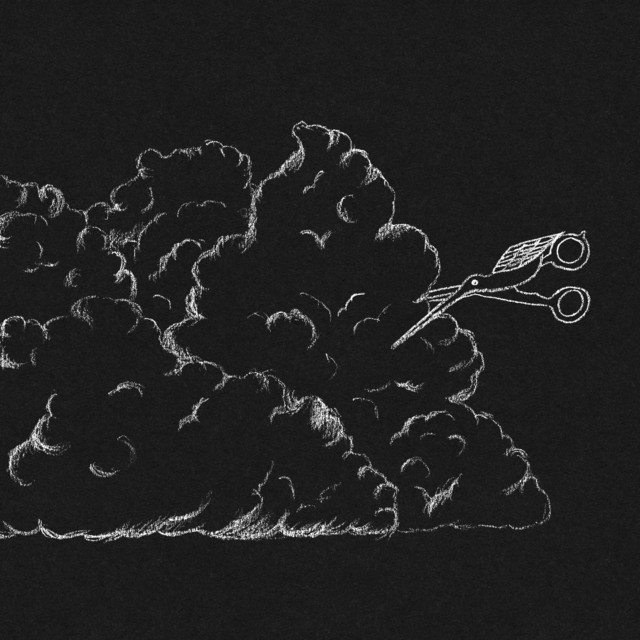
Here the class dimension surfaces openly. The "few" whose thirst is being quenched are not faceless. They are the ones with enough distance from consequences to keep placing the bets. The "masses" mentioned just after are specifically described as having no time to be informed, no say in the outcome. That's not an accident of the system. That's the system working as intended.
"Gotta win the race, just win this race / A race to lose control"
This is the verse's most devastating turn. The race logic introduced in verse one now reveals its endpoint. The finish line was never prosperity or stability. It was always the moment control slips entirely. Winning the race and losing control are the same event. That's the trap González is naming.
Pre-Chorus
Good intentions, falling dominoes
Before the full chorus returns, González inserts one of the song's most philosophically pointed moments. It's brief, almost parenthetical, but it changes everything about how the chorus that follows lands.
"Intentions don't matter much / As the dominoes start to fall"
This is not cynicism. It's consequence. The pre-chorus dismisses the most common defense people reach for when systems begin to fail: we meant well, we didn't see this coming, nobody wanted this. González says none of that is relevant once the chain reaction starts. Intent and outcome are two different ledgers, and the second one is the one that matters. This sets up the repeated chorus not as a moral lecture but as a structural fact.
Chorus
Escalating toward full weight
The chorus returns here with more force and more variation, building on itself in a way that mirrors the very escalation the song is describing. Each repetition adds a new dimension to the original claim.
"When we're the ones to cause the storm / Hey! It's not random / If we rise, just to peak and fall"
The arc described here is the classic boom-and-bust pattern, civilizations, markets, ecosystems, all of them subject to the same trajectory when growth is treated as an end in itself. González doesn't romanticize the fall. The rise-to-peak-to-fall sequence is presented as avoidable, which makes it tragic rather than inevitable.
"It's still within our own control / When we're the ones to unleash a perfect storm"
That final line is the song's most important word: unleash. Storms are weather. Unleashing is a decision. It implies hands on a leash, a moment where the choice was still available, where something was held and then deliberately released. The "perfect storm" of the title is not a metaphor for bad luck. It's an indictment of deliberate choices compounding into catastrophe. And the closing insistence that it's still within our control is not optimism. It's the harder version of the message: we cannot claim helplessness when the leash was in our hands.
Conclusion
The storm we chose to name
"A Perfect Storm" opens with a question hiding inside an observation: who is actually responsible for the catastrophes we call inevitable? By the time the final chorus fades, González has answered it with unusual clarity and zero sentimentality. The forces on the sidelines are real. The numbers game is real. The deliberate silencing of the masses is real. And the storm that results is not an act of nature. It's a signature.
What makes this song linger is that it never lets the listener off the hook with despair. The repeated line "it's still within our own control" refuses to close into fatalism. That's the most demanding thing about González's argument. It's not just an accusation aimed at the few. It's a mirror held up to everyone who accepts the framing that collapse is random, that these things just happen, that nobody could have seen it coming. The song says: we saw it coming. We built it. And naming that is the first act of refusing to do it again.


Comments
Loading comments…