


Introduction
Loss that feels like release
Most songs about losing yourself treat it as a wound. "NOISE" treats it as a doorway. ivri opens with a portrait of someone who has drifted so far from who they were that the person who knew them can no longer recognize them, and somewhere in that observation lives something that feels almost like relief.
The emotional question the song refuses to answer cleanly is right there in the chorus: is this disappearing, or is this becoming? That tension is what the whole track is built around, and ivri never resolves it neatly. That unresolved space is exactly where the song earns its power.
Verse 1
Identity already gone
The first verse hits like a quiet verdict. There is no fight left in it, no pleading. The narrator speaks about someone, maybe themselves in the second person, as already past the point of return.
"Those thoughts aren't yours, anymore / You are already forgotten"
The word "already" does a lot here. It is not a warning. It is a report. Whatever erosion happened, it finished while no one was paying attention. The corrupted file metaphor is cold and modern, treating a person's sense of self like data that failed to save. The emotional effect is distance, not accusation.
Chorus
The womb reframes everything
Then the chorus flips the whole thing. After that clinical first verse, ivri refuses to land in grief.
"Is this loss or redirection? / It was a womb, not a void"
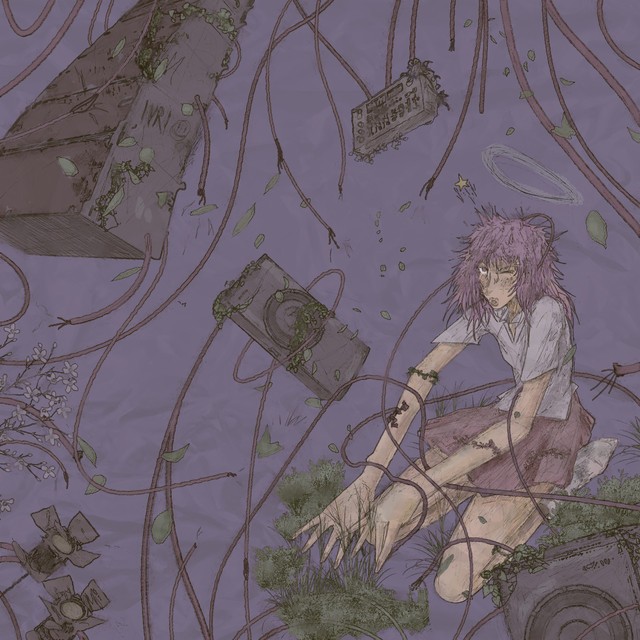
That single line recontextualizes everything before it. The emptiness the narrator just described is not absence. It is gestation. A womb is dark and formless but it is not nothing. It is the condition for something. And then immediately: "I desire for creation / I need noise, I need noise." The hunger for noise is not about chaos for its own sake. It is about proof of life, about stimulation and signal after a long static silence.
Verse 2
Erosion from living too much
The second verse deepens the diagnosis. Where the first verse focused on forgetting, this one focuses on accumulation. Too many lives lived, too many words worn out, too much done. The person in question has not been hollowed by absence but by excess.
"You have lived too many lives here / Your words no longer sincere"
It is a different kind of loss. Not neglect but overload. The identity did not simply fade, it fractured under the weight of too many versions of itself. The repeated line "You're not the one I've known, anymore" lands differently the second time because now we understand it is not just change. It is irrecoverability from the inside out.
Outro
Need stripped to its core
The outro is just three words: "I need noise." No more questions about loss or redirection. No more womb or void. Just the bare drive. Stripping the chorus down to that single repeated need is the right move because it removes the intellectual framing and leaves only the hunger. The song ends not with resolution but with appetite.
Conclusion
"NOISE" is ultimately about what comes after you stop recognizing yourself. ivri does not mourn that moment. The song argues, quietly but firmly, that emptiness is not the destination. The need for noise is not a symptom of brokenness. It is the first signal that something new is trying to exist. The song ends mid-reach, which is exactly the point.


Comments
Loading comments…