


Introduction
Return without resolution
Most homecoming songs know how they feel. They're either joyful or heartbroken, nostalgic or bitter. "One Stop" refuses all of that. Aldous Harding walks back into a familiar place, clocks the tree they used to climb, pops into a corner shop, and the whole thing feels tender and suspended, like someone who came back but hasn't decided what for yet.
The emotional center of the song is a question that keeps repeating without ever becoming rhetorical: "Why wouldn't I wanna meet ya?" It sounds like an invitation. It might be a dare. That tension between warmth and guardedness is what makes the song feel so alive.
Verse 1
Home looks familiar, feels foreign
The opening is deliberately quiet and concrete. A tree. A local shop. A long line of small purchases placed on a counter. Harding isn't describing a dramatic return, just the texture of being somewhere again after too long away.
"I've been away too long / There's the tree that I used to climb"
That line isn't sentimental. It's almost clinical, like ticking off evidence of a former life. "I love the streets here at night" closes the verse with something that feels closer to affection, but even that is kept at arm's length. It's a love for place, not people. Not yet.
Verse 2
Recommitting to truth, loosely
The second verse shifts from observation to intention. Harding is going to write what they know, things they haven't known for a long time. There's a sense of creative and personal reconnection happening, a return to self as much as to place.
"I met the real John Cale / He had no words, but I don't mind"
This is one of the most interesting moments in the song. A real encounter, held lightly. Cale says nothing; Harding fills the stage while he eats rice. The parallel is subtle but pointed: proximity to someone iconic, someone quiet, someone not giving anything, and Harding performing anyway. It's a small portrait of doing the work even when the room is indifferent.
Pre-Chorus
The self in negotiation
"I rip myself on / I rip myself off"
This is the psychological hinge of the whole song. Harding isn't talking about a relationship here, at least not directly. This is about the internal cost of imagining, of projecting yourself into situations, into connections, into futures. Turning yourself on for the possibility, then pulling back when it gets real. "Imagining from the block" grounds it physically, but the feeling is all interior. It's the loop a person gets stuck in before they let something matter.
Chorus
Warmth dressed as a question
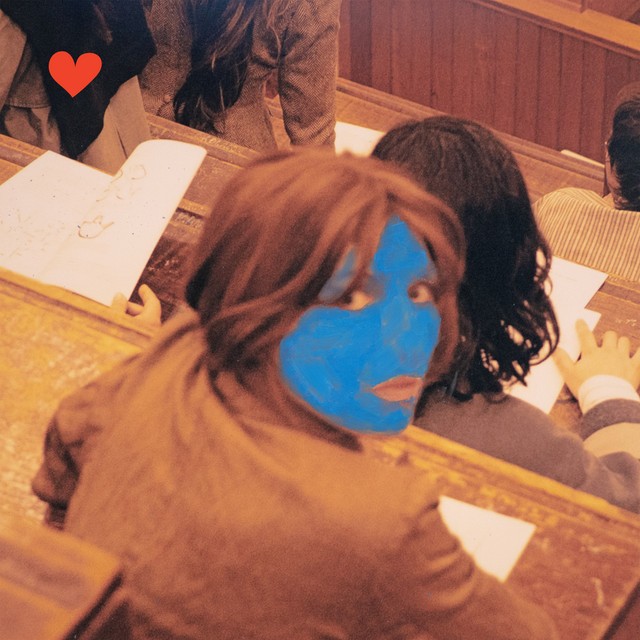
"Why wouldn't I wanna meet ya?"
On the surface this is an enthusiastic yes. Of course I want to meet you. But the phrasing is defensive. It answers a question nobody asked. "Why wouldn't I" is the logic of someone talking themselves into something, or pushing back against a version of themselves that keeps hesitating. The more the chorus repeats, the more it starts to feel like persuasion rather than certainty.
Verse 3
Self-deception becomes part of the story
Harding revisits the commitment to writing what they know, but this time a complication arrives.
"So the lies I tell / Send me up and I can't get down?"
The honesty of the first "write what I know" gets muddied here. Maybe some of what Harding knows is the lies they tell themselves. "I'm wearing big grass to town" is the kind of surreal image Harding deals in, something overgrown and out of place, dragging nature into the ordinary, performing something that doesn't quite fit the setting. It's funny and a little uneasy at the same time.
Bridge
Belief was never part of the deal
"I've never been a believer"
Short and blunt. The warmth of the chorus suddenly has a ceiling. Harding isn't promising faith in this connection, or any connection. And yet the chorus lines fold back in, "Why wouldn't I wanna hold you?" The want is real. The belief just isn't there. That's not cynicism. That's a very specific kind of honesty about what someone can and can't offer.
Outro
The door stays open, conditionally
"I'll never do it again / Unless you wanna do it again"
This is the most quietly devastating line in the song, and it's delivered like a shrug. The narrator closes the door and immediately leaves it ajar. It's not a contradiction. It's how people who guard themselves actually operate. The condition is everything: unless you want to. The other person holds the key, and Harding seems comfortable with that, or at least practiced at it.
Conclusion
"One Stop" starts as a homecoming and ends as a portrait of someone who knows themselves very well, maybe too well to fully surrender. The question in the chorus never stops being a question. The want is genuine, the belief is absent, and the door stays open without any promise of what happens if someone walks through it. Harding doesn't resolve the tension because the tension is the point. Some returns are about place. This one is about figuring out, slowly and honestly, how much of yourself you're willing to bring back with you.



Comments
Loading comments…